”GULF REGION ON EDGE AS EXPLOSIONS AND ATTACKS FUEL FEARS OF A WIDER REGIONAL WAR”
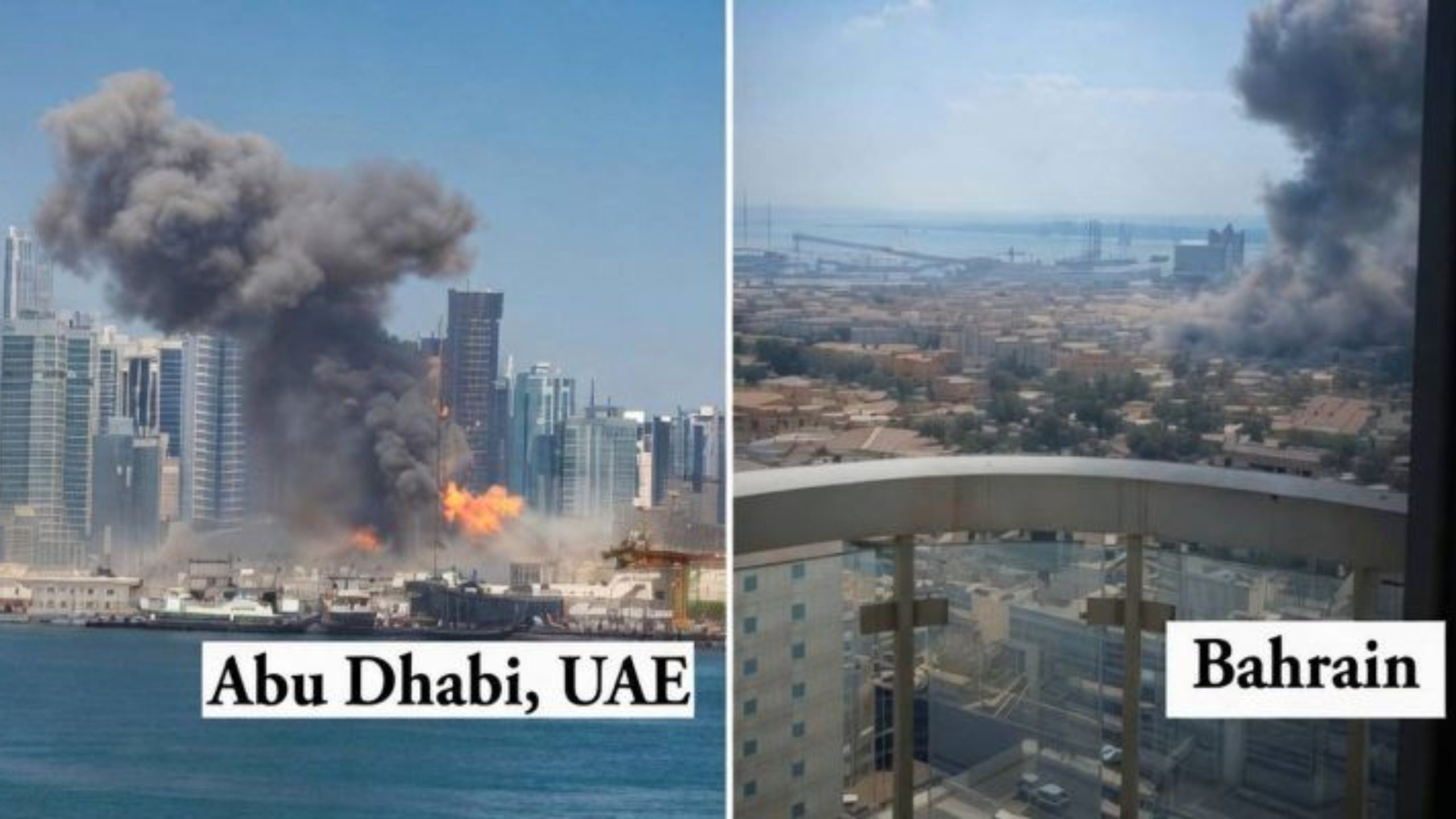
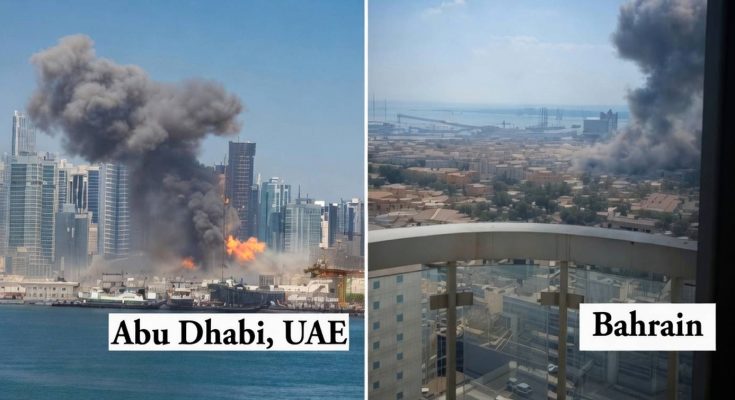
The Gulf region is facing renewed security concerns as the broader conflict involving Iran continues to disrupt the Middle East, with reports of attacks, explosions and heightened military activity placing several U.S.-aligned Gulf states on alert. Images circulating online appear to show large plumes of smoke and explosions in or near major urban areas in the United Arab Emirates, Bahrain, Qatar and Saudi Arabia. However, the images alone do not establish when or where they were taken, and claims that the four countries have jointly launched a coordinated military attack have not been independently confirmed. The wider security situation is nevertheless serious.
Reuters reported Wednesday that tensions surrounding the Iran conflict continue to weigh on Gulf markets, while uncertainty over negotiations and shipping through the Strait of Hormuz remains a major concern. Oil prices have also risen as investors assess the possibility that the conflict could continue for longer than expected. The strategic importance of the Gulf makes any escalation particularly consequential. The region is home to major energy infrastructure, international airports, military installations and some of the world’s most important shipping routes. Any sustained disruption could affect not only the countries directly involved but also global energy markets and international trade.
The UAE, Bahrain, Qatar and Saudi Arabia have all faced security challenges connected to the wider regional conflict. Earlier this year, Iranian attacks were reported against U.S. military facilities in several Gulf countries, including Bahrain, Qatar and the UAE. Reports at the time described missile launches and interceptions across the region. The current situation is occurring against a backdrop of uncertainty surrounding efforts to reduce the fighting.
Regional Tensions Escalate Amid Diplomatic Uncertainty
Reuters reported that hopes for extending a ceasefire agreement have weakened, while Iran has disputed claims that negotiations with Washington are progressing. Tehran has also continued to link the future of the Strait of Hormuz to the outcome of the broader confrontation. For Gulf governments, the immediate challenge is balancing military preparedness with the need to prevent the conflict from spreading. Air-defense systems, intelligence services and security forces remain central to protecting population centers and critical infrastructure.
Saudi Arabia is also facing pressure from attacks connected to the broader conflict. Recent reporting has described concerns over potential strikes against civilian and economic infrastructure, including ports, airports and energy facilities. Meanwhile, financial markets are closely monitoring developments. Gulf stock exchanges have shown signs of caution as investors assess the potential consequences for oil production, transportation and regional business activity. On Wednesday, markets in Dubai, Abu Dhabi and Qatar recorded modest gains despite continuing geopolitical uncertainty, illustrating the tension between economic resilience and growing security risks.
The Strait of Hormuz remains one of the most important pressure points. A sharp decline in vessel traffic has underscored the potential consequences of prolonged instability around the waterway, through which a significant portion of global energy supplies traditionally passes. For civilians across the region, the most immediate concern is safety. Explosions and missile interceptions can create uncertainty even when defensive systems prevent direct impacts. Authorities must also contend with falling debris, temporary airspace closures, transportation disruptions and possible damage to nearby infrastructure.
Verification Challenges Amid Rapid Information Spread
At this stage, however, there is an important distinction between documented attacks against Gulf states and the unverified claim that four Gulf governments have formally joined together to launch a coordinated offensive. No reliable confirmation reviewed for this report establishes that the UAE, Bahrain, Qatar and Saudi Arabia have jointly initiated such an attack. The available evidence instead points to a highly volatile regional conflict in which multiple countries are confronting threats from missiles, drones and other forms of military action. That distinction is critical as dramatic images spread rapidly across social media. Smoke clouds and explosions can be real while the accompanying captions or explanations are inaccurate, outdated or taken from an entirely different incident.
The region now faces a dangerous combination of military confrontation, economic uncertainty and diplomatic deadlock. With the Strait of Hormuz under pressure and governments across the Gulf remaining on alert, even a single new attack could create another wave of escalation. For now, officials and residents across the Gulf are watching closely, while international governments continue to assess whether diplomacy can prevent the conflict from developing into an even broader regional war.