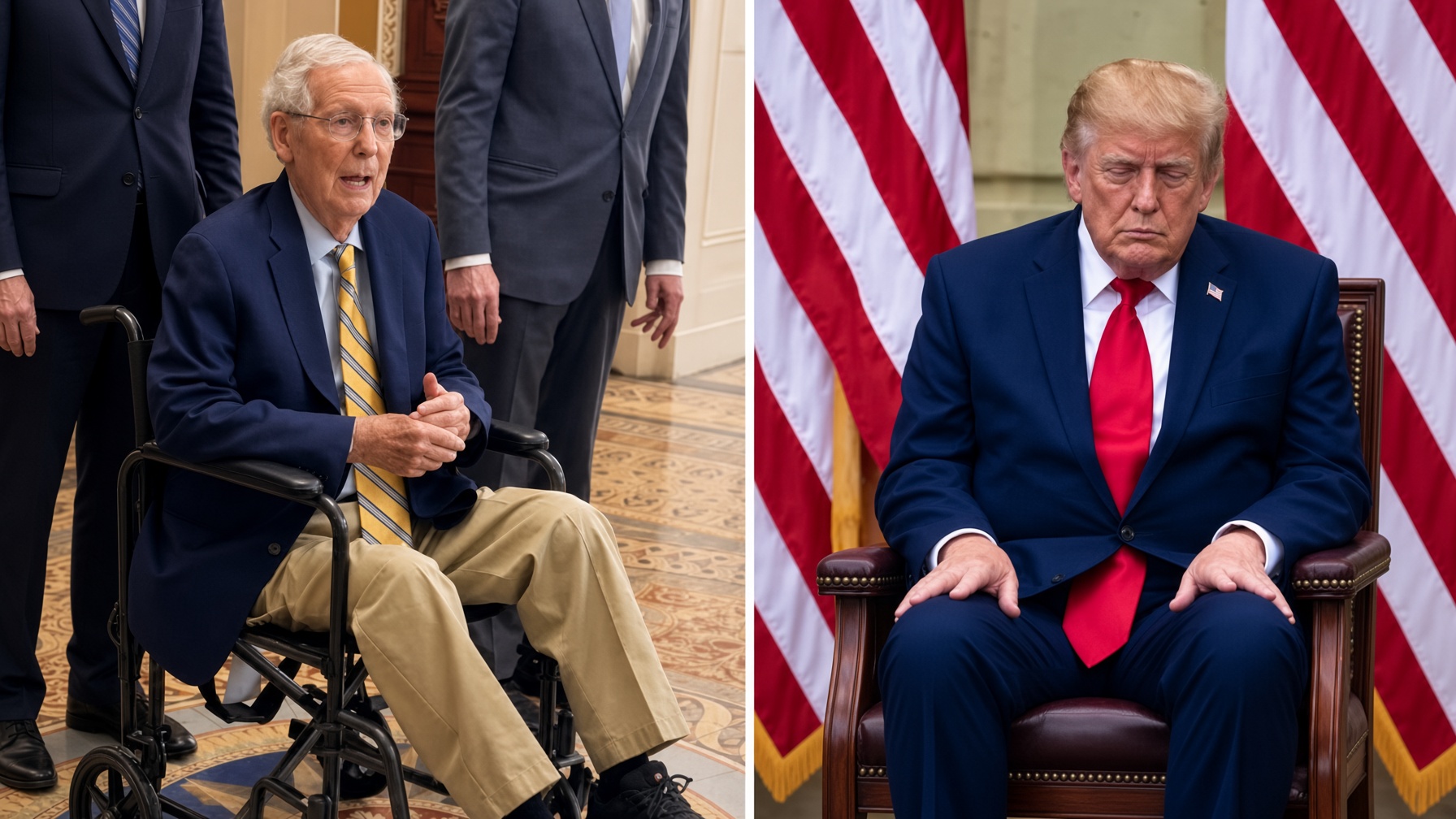
After nearly three months away from public view, Sen. Mitch McConnell returned to the U.S. Senate on Monday, September 14, marking his first public appearance and first Senate vote since he was hospitalized following a fall at his Washington home in June. The 84-year-old Kentucky Republican arrived at the Capitol in a wheelchair and briefly spoke with reporters outside the Senate chamber before heading inside to participate in a vote.
McConnell acknowledged that his recovery is not yet complete. In a statement released before his return, he said the process had been “long and often frustrating” and that the lingering effects of childhood polio had made his recovery more difficult. He said he was “still not quite back to 100%” but had assured Senate Majority Leader John Thune that he would do his best to be present for important votes while continuing physical therapy under the advice of his doctors.
His return provides the clearest indication yet that McConnell intends to remain involved in Senate business during the final months of his current term. He has previously announced plans to retire from the Senate after the 2026 elections, with his current term scheduled to end in January 2027. During his brief exchange with reporters Monday, McConnell said he was ready to get back to work and finish the remaining business of the current Congress.
Details of McConnell’s Hospitalization and Recovery
McConnell was hospitalized June 14 after suffering a fall at his Washington residence. Details about the incident were initially limited, leading to considerable public speculation about his condition. McConnell later disclosed that he had been briefly unconscious following the fall and was treated for a mild case of pneumonia while hospitalized. Medical evaluations reportedly found no fractures, stroke, cardiac abnormalities, tumor or hemorrhage.
After his hospitalization, McConnell spent additional time in a rehabilitation facility before being discharged in early August. His office said he would continue an intensive physical-therapy program at home. His extended absence nevertheless prompted questions from lawmakers and Kentucky officials about his health and his ability to continue carrying out his Senate responsibilities.
McConnell’s return comes as senators resume work following the August recess and prepare to take up several significant legislative matters. Among the issues he has identified as a priority is a new farm bill. He also highlighted his continued interest in U.S. relations with NATO and support for efforts involving Russia and Ukraine.
McConnell’s First Vote Back and Ongoing Concerns
His first vote back came Monday on a judicial nomination. McConnell’s participation underscored that, despite his ongoing recovery, he remains capable of returning to the Senate floor and taking part in congressional business. However, his own statement made clear that his attendance may not be consistent for every vote while he continues physical therapy.
McConnell’s health has attracted public attention for several years, including previous falls and injuries. His history of childhood polio has also contributed to longstanding mobility difficulties. The latest hospitalization therefore became another chapter in a series of health-related incidents that have affected his public schedule.
For now, McConnell’s return marks a significant change from the uncertainty that surrounded his prolonged absence. While he has acknowledged that he is not fully recovered, he has indicated that he plans to continue working and participating in the Senate as his health permits. His appearance on Capitol Hill provides a public update on his condition while leaving open questions about how frequently he will be able to attend votes during the remaining months of his Senate term.