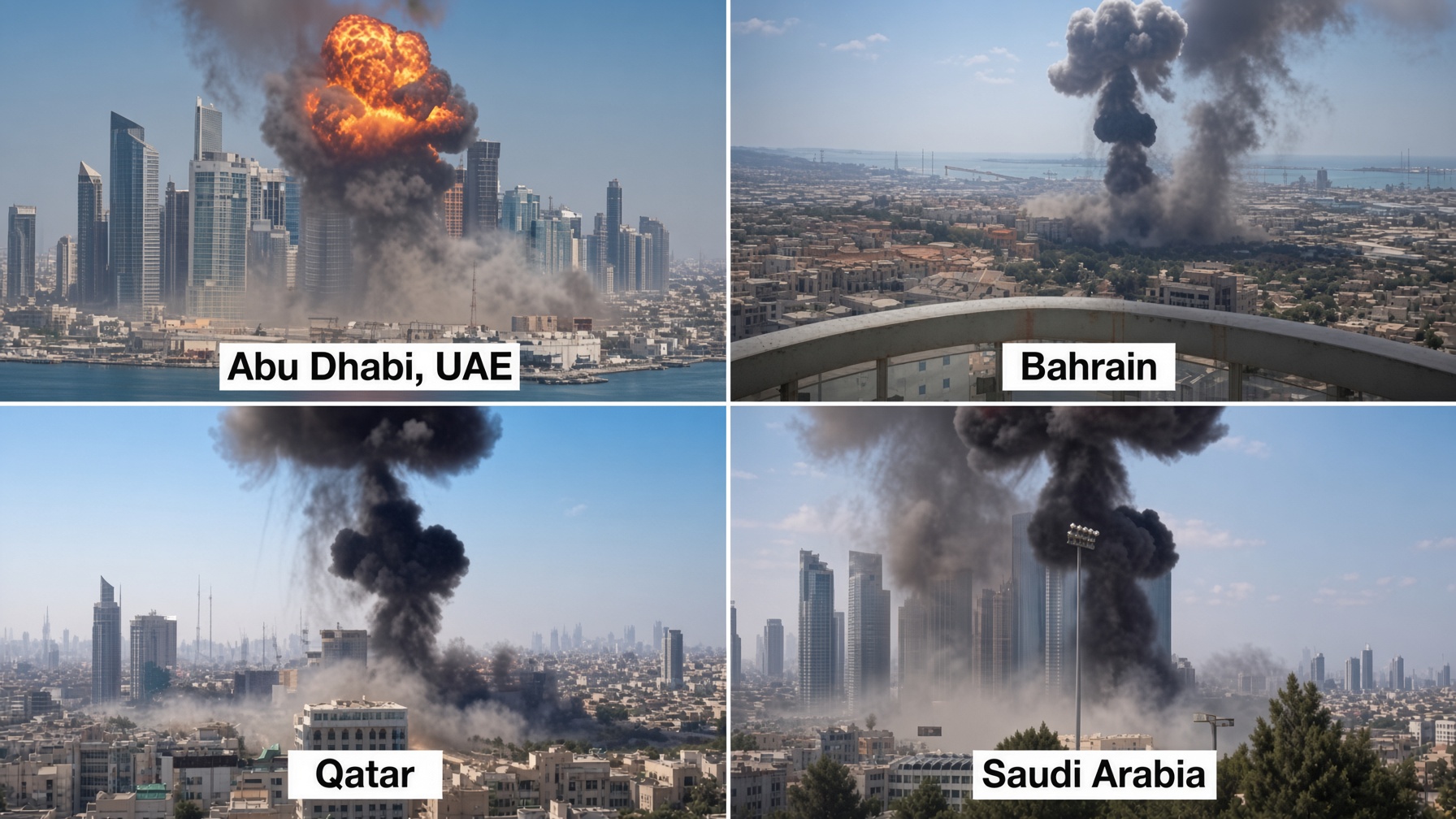
PERSIAN GULF — The Persian Gulf is once again on a war footing. Iran has launched waves of missiles and drones toward locations hosting U.S. military forces across the region, forcing Gulf allies to activate air defenses and sending emergency alerts through communities already bracing for another round of escalation.
This is no longer a contained confrontation. Iran’s repeated attacks against American military positions and regional allies have demonstrated just how quickly the conflict can spread across the Gulf. U.S. forces maintain a major strategic presence in Bahrain, Qatar, Kuwait and the United Arab Emirates, making those installations prime targets whenever Tehran chooses escalation. Reuters has reported multiple rounds of Iranian attacks against U.S. bases and assets across the region.
UAE Defenses Engaged
In the United Arab Emirates, explosions and reports of incoming threats have put security forces on high alert. UAE air defenses have previously intercepted Iranian missiles and drones, while Iranian forces have claimed attacks against facilities associated with U.S. operations.
Al Dhafra Air Base remains particularly significant because of its connection to U.S. military operations in the region. Iranian attacks have previously targeted American-associated infrastructure in the UAE, demonstrating that even major Gulf installations can come under direct pressure during an escalation.
But claims of specific damage from any individual barrage must be treated carefully until authorities complete assessments and independent evidence becomes available.
Bahrain and Qatar Under Pressure
Bahrain remains one of the most strategically important American military locations in the Gulf. It hosts Naval Support Activity Bahrain, headquarters of the U.S. Navy’s Fifth Fleet, making the kingdom a critical part of Washington’s regional military network.
Iran has repeatedly claimed attacks against U.S.-linked facilities in Bahrain, including Sheikh Isa, while Bahraini authorities have reported intercepting incoming threats during previous barrages. Reuters and other outlets have documented repeated Iranian attacks against American positions throughout the Gulf.
Qatar has faced the same danger. Al Udeid Air Base is one of the most important U.S. military installations in the region, and Iranian forces have repeatedly targeted or threatened American assets there. Satellite imagery has also documented damage to portions of U.S. infrastructure at Al Udeid from earlier attacks.
Kuwait Becomes Another Front
Kuwait has likewise found itself directly exposed. Iranian missiles and drones have previously targeted locations supporting U.S. forces, with Kuwaiti air defenses engaging incoming threats.
The pattern is unmistakable: American military infrastructure across the Gulf is increasingly exposed to Iranian missile and drone attacks, while U.S. allies are being forced to defend their territory against strikes connected to a conflict they did not initiate.
The Strait of Hormuz: The Bigger Threat
And then there is the Strait of Hormuz.
The narrow waterway is one of the world’s most important energy chokepoints. Continued fighting around the Gulf threatens commercial shipping, energy exports and already-fragile global markets. Reuters has reported that the conflict has severely disrupted shipping through the region, while the Strait remains at the center of the confrontation between Washington and Tehran.
Every additional missile launch, drone attack or naval confrontation raises the possibility of another dangerous shock to global energy supplies.
The Gulf Is Running Out of Room for Escalation
The message coming from the battlefield is increasingly clear: the conflict is not staying inside Iran.
Iran has demonstrated its willingness and ability to strike U.S.-linked targets across the Gulf, while Washington continues to maintain significant military forces throughout the region. The result is a volatile confrontation in which one additional attack could trigger another cycle of retaliation.
For American forces and U.S. allies, the immediate priority is defense, interception and damage assessment. For the rest of the world, the biggest question is whether the next missile launch becomes the trigger for an even broader regional war.
The Persian Gulf is already under enormous pressure. One more major escalation could push the entire region into territory nobody can easily control.