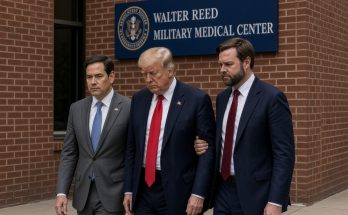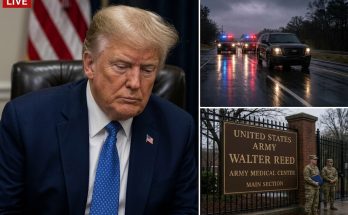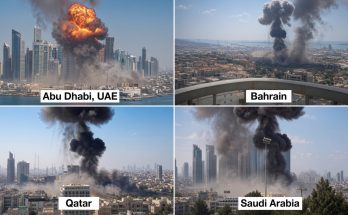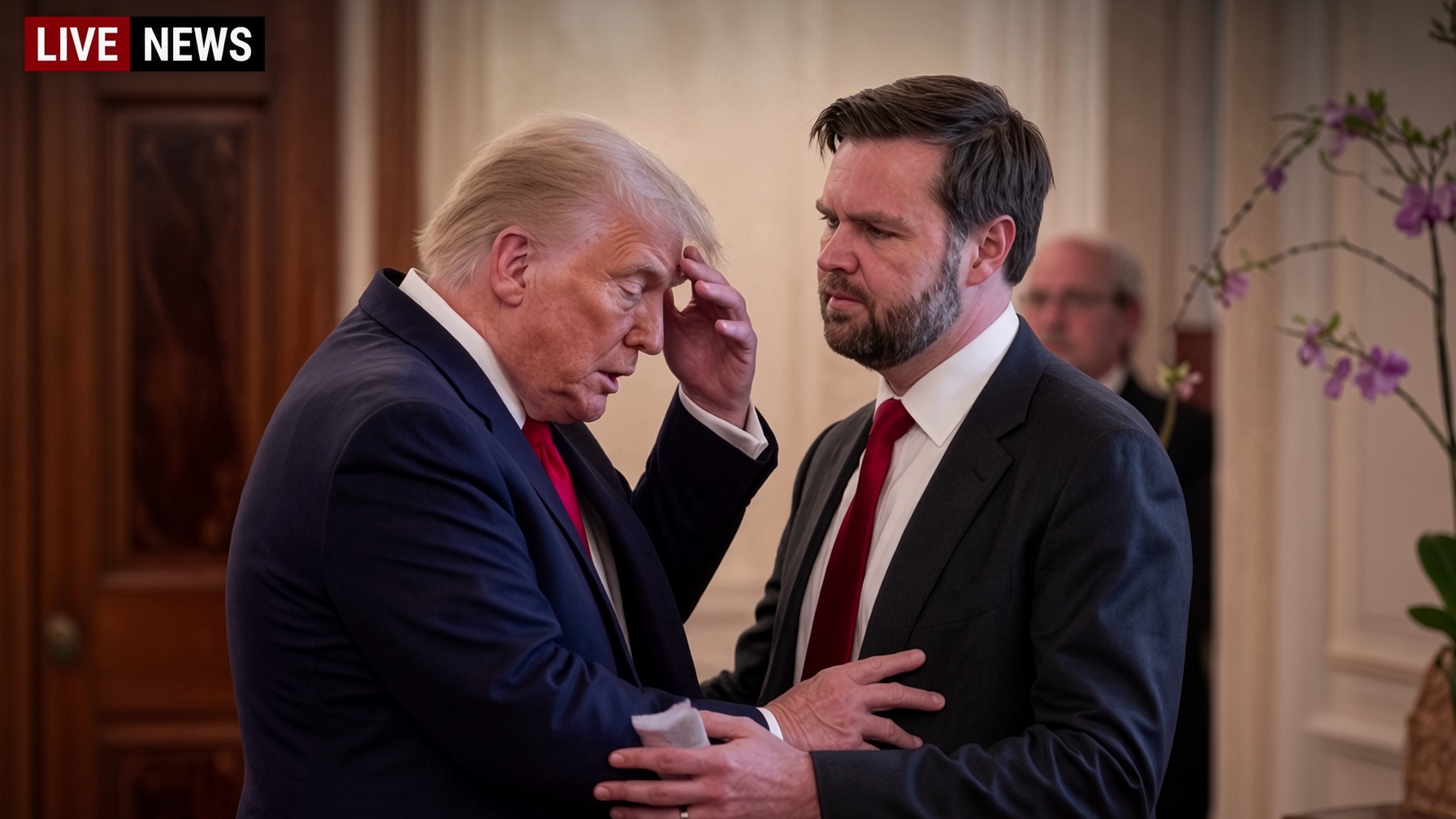
In a vivid illustration of the volatility characterizing the modern information landscape, explosive and entirely unverified social-media claims alleging that President Donald Trump was shot in Washington, D.C., have saturated online platforms. There is, however, no credible evidence, official statement, or legitimate journalistic reporting to support this assertion.
The viral posts often utilize alarmist language, such as claiming the attack occurred “minutes ago,” a psychological tactic designed to induce urgency and manipulate users into sharing the content before critical verification. This has led to a cascade of shares presenting the rumor as genuine “breaking news.” As of this date, no credible confirmation has been identified from federal authorities, national security agencies, or multiple independent, reputable news organizations. In the vacuum of such verification, these online reports must be rigorously treated as fabrications.
The speed at which unverified information can travel is unparalleled. When a claim involves the potential injury of a sitting president, it can generate millions of impressions within an hour, driven by engagement-optimized algorithms that prioritize emotionally charged content over accuracy.
The Danger of Unverified Viral Content
Media literacy experts emphasize that a photograph, video, or screenshot accompanying a viral post does not, by itself, establish when or where an event occurred. Older, authentic footage can be repurposed and presented as fresh evidence of a new incident, while generic chaotic scenes can be reframed with misleading captions. Moreover, the increasing sophistication of digitally altered images and synthetic media allows malicious actors to create highly convincing, yet entirely artificial, depictions of an emergency. For an event of this gravity, responsible outlets mandate a definitive verification chain—often requiring confirmation from the White House, the U.S. Secret Service, federal law enforcement, and other primary sources—before such reports can be aired or published.
The rapid uptake of this latest rumor likely stems from the stark reality that President Trump has faced legitimate threats and actual violence.
The July 2024 Butler Shooting
Most notably, on July 13, 2024, Trump was the target of a genuine assassination attempt during a campaign rally in Butler, Pennsylvania. The FBI identified Thomas Matthew Crooks as the attacker and opened a massive federal investigation. Trump was wounded when a bullet struck his ear while he was addressing supporters from the stage. One rally attendee was tragically killed, and two others were seriously injured before Crooks was neutralized by a Secret Service counter-sniper.
The FBI officially designated the Butler shooting as both an assassination attempt and a potential act of domestic terrorism. The investigation produced widely recognizable photographs and videos of a bloodied Trump being shielded by Secret Service agents. Because this imagery remains potent and iconic, it can be easily weaponized, with malicious or irresponsible actors misrepresenting old footage from 2024 as evidence of a fictitious attack in 2026. This dynamic was observed previously, as documented how a tidal wave of misinformation and conspiracy theories spread rapidly following the Butler shooting.
Other Security Incidents and the Need for Verification
Other, distinct security incidents have also occurred near the president, providing further opportunity for confusion. For example, in May 2026, a shooting occurred at a White House security checkpoint, an event that involved Secret Service personnel but did not involve the direct targeting or injury of Trump himself.
Such incidents underscore the absolute necessity of contextualizing any dramatic photograph or video. Verification requires establishing the precise location, date, and circumstances before a report is presented to the public. For now, the definitive record shows that Trump survived the July 2024 attempt in Butler, but there is zero credible evidence to support the claim that he was shot in Washington, D.C., in the incident described by recent viral posts. Claims to the contrary remain classified as unverified and should be treated with extreme skepticism. Responsible journalism and careful news consumption prioritize evidence over repetition.