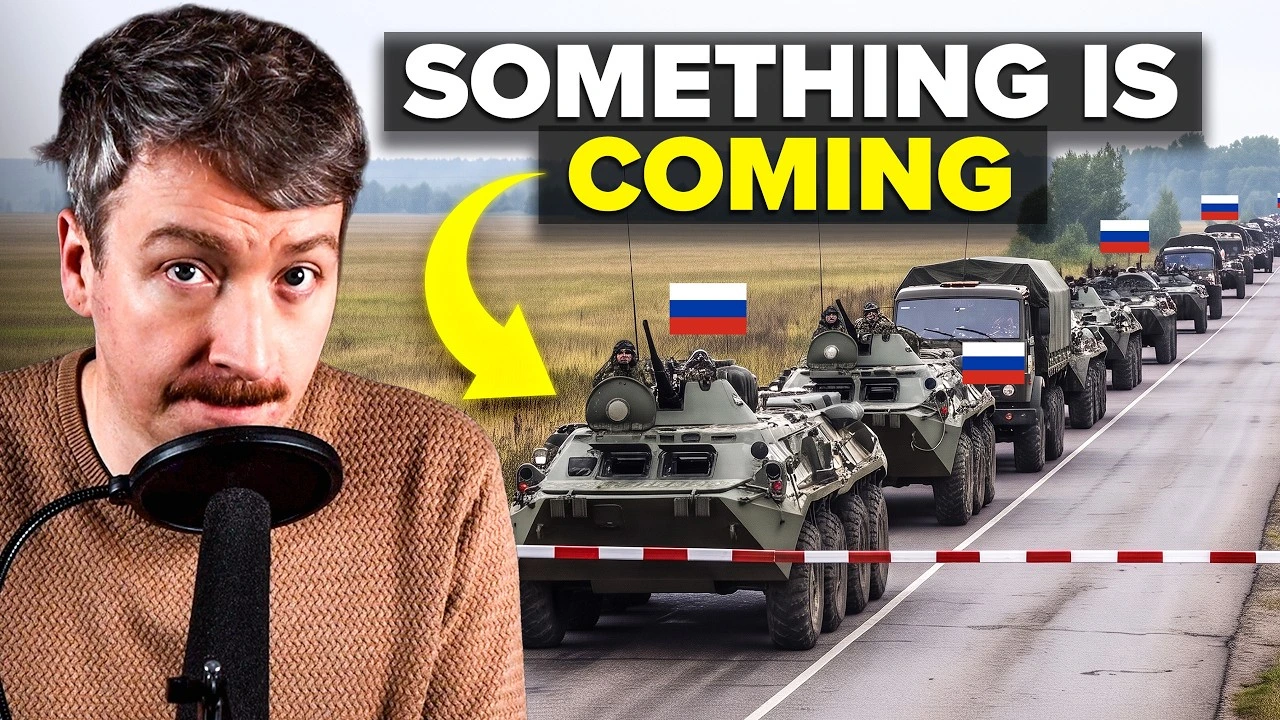
While the world watches the attritional fight in Ukraine, Russia is quietly executing a massive conventional military buildup along NATO’s borders. Satellite imagery confirms that brand-new T-90M tanks, armored fighting vehicles, and advanced Malva artillery systems are flowing into storage depots less than 500 kilometers from Estonia, Latvia, and Finland. From rail lines in Belarus being structurally reinforced for Iskander missile launchers to a new 3,000-km early-warning radar rising in Kaliningrad, discover why Moscow is stockpiling its newest armor near Europe—and whether NATO has the industrial depth to stop what’s coming.
Video Chapters
⏱️ CHAPTERS:
- 00:00 – Introduction: Tension Escalation & Russian Border Stockpiling
- 01:19 – The T-90M Bui Influx: Factory-Fresh Armor Stockpiled at the 22nd Base
- 03:17 – Multi-Axis Staging Depots: Topchikha, Base 6018, & Karelian Artillery
- 04:01 – The Strategic Diversion Paradox: Factory-New Armor Siphoned from Ukraine
- 07:19 – The Belarus Axis: Militarization, Railway Hardening, & Spring 2027 Horizon
- 10:32 – Kaliningrad A2/AD Bastion: 3,000 km OTH Radars & Iskander Corridors
- 13:18 – Trojan Horse Infrastructure: Strategic Real Estate Acquisition in the Baltics
- 14:00 – Strategic Timelines: Post-Ukraine Reconstitution & Industrial Reality
- 15:10 – NATO Readiness & The Industrial Depth Gap: Vandier’s Drone Warning
-
Russia’s activities along NATO’s eastern and northern borders consist of a multi-pronged strategy combining long-term military restructuring, infrastructure expansion, and aggressive “hybrid warfare” aimed at testing NATO’s response thresholds.
1. Rebuilding and Expanding Military Infrastructure
Despite committing massive resources and personnel to the war in Ukraine, Russia is actively laying the groundwork for a larger long-term military footprint along NATO borders:-
Expanding Along the Finnish Border: Following Finland’s accession to NATO, Moscow reconstituted the Leningrad Military District. Satellite imagery and intelligence investigations show Russia modernizing and expanding barracks, logistics depots, and bases near the 830-mile Finnish border (such as in Petrozavodsk and Karelia).
-
Stockpiling Armor and Equipment: Investigations indicate that while frontline combat forces remain tied up in Ukraine, Russia has begun channeling newly manufactured armored vehicles, tanks, and artillery into rear depots and garrisons near NATO’s borders, setting up infrastructure capable of housing tens of thousands of personnel in the coming years.
-
Kaliningrad & the Baltic Perimeter: Russian garrisons in the Kaliningrad exclave and along Estonia’s border (around Pskov and Ivangorod) maintain an active presence of armored platforms, air defense, and electronic warfare assets.
2. “Gray Zone” Hybrid Warfare & Provocations
Rather than risking direct, full-scale military conflict under NATO’s Article 5, Russia is using below-threshold tactics to test border vigilance and disrupt NATO societies:-
GPS & Electronic Warfare Jamming: Commercial aviation and maritime shipping across the Baltic Sea and eastern flank have repeatedly faced extensive GPS spoofing and electronic interference originating from Russian EW hubs in Kaliningrad and the St. Petersburg region.
-
Drone Incursions and Airspace Violations: Russian reconnaissance drones and loitering munitions have periodically strayed into or transited the airspace of NATO border states, including Poland, Romania, and Latvia, prompting NATO to boost air defense deployments and scramble fighter jets.
-
Border Buoy & Frontier Skirmishing: In 2024, Russian border guards physically removed navigation buoys demarcating the border on the Narva River between Estonia and Russia, illustrating continuous micro-provocations to challenge established boundaries.
-
Weaponized Migration: Moscow and Minsk have repeatedly funneled irregular migrants toward Finnish, Polish, and Baltic border checkpoints, forcing Finland to shut its eastern road crossings.
3. Diplomatic Posturing and Strategic Messaging
The Kremlin has consistently demanded that NATO roll back its footprint to pre-1997 lines, framing any allied defensive build-up in Eastern Europe as a provocation. By constructing permanent installations, conducting readiness exercises, and stationing tactical missile systems (including nuclear-capable Iskander systems) in Belarus and adjacent border districts, Russia aims to:-
Tie down NATO resources by forcing allied nations to reinforce their eastern flank (the “Baltic Air Policing” mission, multinational battlegroups, and border fortifications like the “Baltic Defense Line”).
-
Signal deterrence to dissuade European powers from taking more aggressive measures or directly intervening in Ukraine.
-
Prepare a post-Ukraine posture so that once fighting in Ukraine slows or halts, Moscow’s Western-facing military districts are already built to support large-scale troop rotations.
-