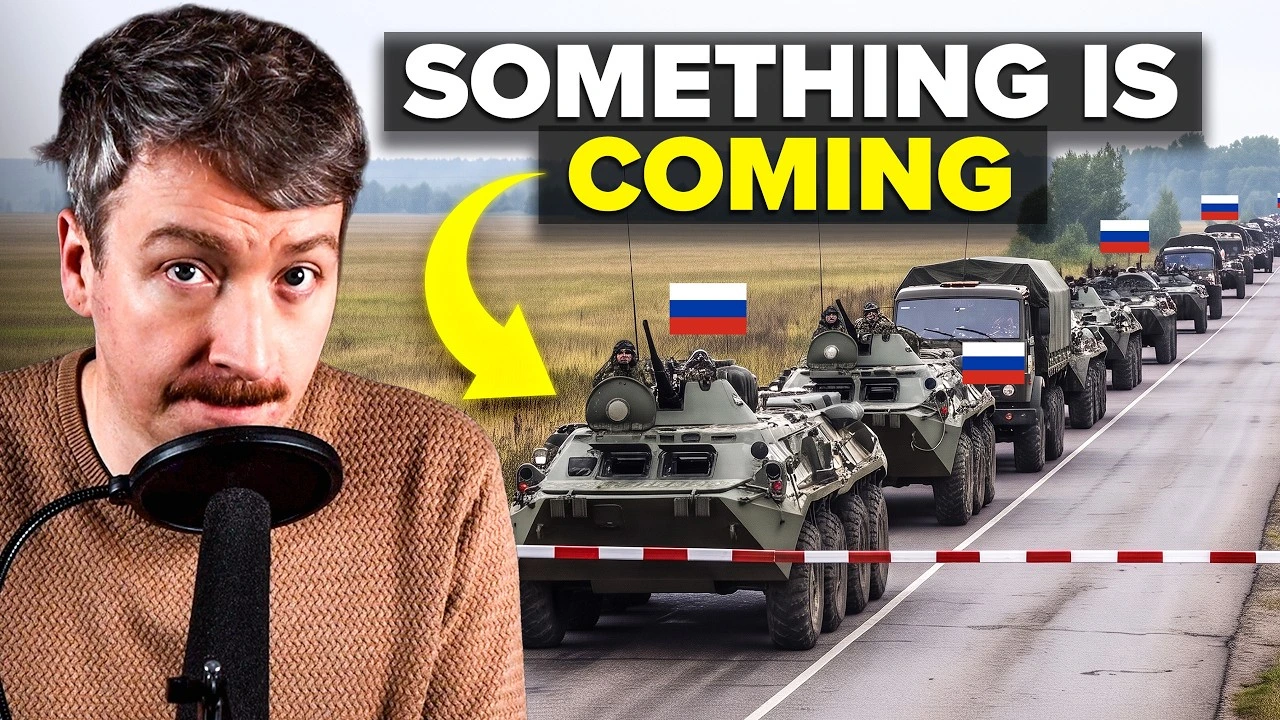
Russia’s Massive Military Buildup Near NATO Borders Raises New Security Concerns
While the world’s attention remains focused on the grinding war in Ukraine, Russia appears to be pursuing a much broader military strategy—one that could have significant implications for the future security of Europe and the NATO alliance.
New satellite imagery reportedly reveals a substantial buildup of Russian conventional military equipment near NATO’s eastern and northern borders. Newly manufactured T-90M main battle tanks, armored fighting vehicles, and advanced Malva self-propelled artillery systems are reportedly being transferred into storage facilities and military depots located less than 500 kilometers from Estonia, Latvia, and Finland.
The developments raise serious questions about Moscow’s long-term military ambitions and whether the Kremlin is preparing for a larger strategic confrontation beyond Ukraine.
Russia’s Military Expansion Strategy
The reported buildup extends beyond tanks and armored vehicles. Military infrastructure projects across Russia and neighboring territories suggest a broader effort to strengthen the country’s ability to move, deploy, and sustain forces near NATO’s eastern flank.
In Belarus, rail infrastructure is reportedly being reinforced to accommodate the movement of heavy military equipment, including systems associated with Russia’s Iskander missile capabilities. Meanwhile, developments in Kaliningrad, Russia’s heavily militarized Baltic exclave, have drawn attention to the expansion of early-warning and surveillance infrastructure.
One particularly significant reported project involves a radar installation described as having a detection range of approximately 3,000 kilometers. Such capabilities could strengthen Russia’s ability to monitor military activity across large portions of Europe and surrounding regions.
Taken together, these developments suggest that Moscow is not simply focused on replacing equipment lost in Ukraine. Russia may also be investing in the infrastructure, logistics, and industrial capacity needed to maintain a substantial military presence near NATO territory for years to come.
Can NATO Match Russia’s Industrial Capacity?
For NATO, the challenge extends beyond counting tanks, missiles, and artillery systems. The alliance must also consider ammunition production, equipment replacement, military logistics, air defense, and the ability to sustain operations during a prolonged conflict.
European governments have increased defense spending and accelerated efforts to expand domestic weapons production. However, rebuilding industrial capacity takes time, while Russia continues to operate a wartime military economy.
The central question is no longer simply how much military equipment Russia can assemble, but how quickly NATO can strengthen its defenses and maintain a credible deterrent.
Is Russia preparing for a future confrontation with NATO, or is this buildup primarily intended to secure its long-term strategic position in Europe? The answer could shape the continent’s security for decades.