A state Supreme Court has cleared the way for a senator to take office despite an unresolved election challenge.
The unanimous decision removes a judicial barrier to his swearing-in while leaving other restrictions surrounding the disputed election intact.
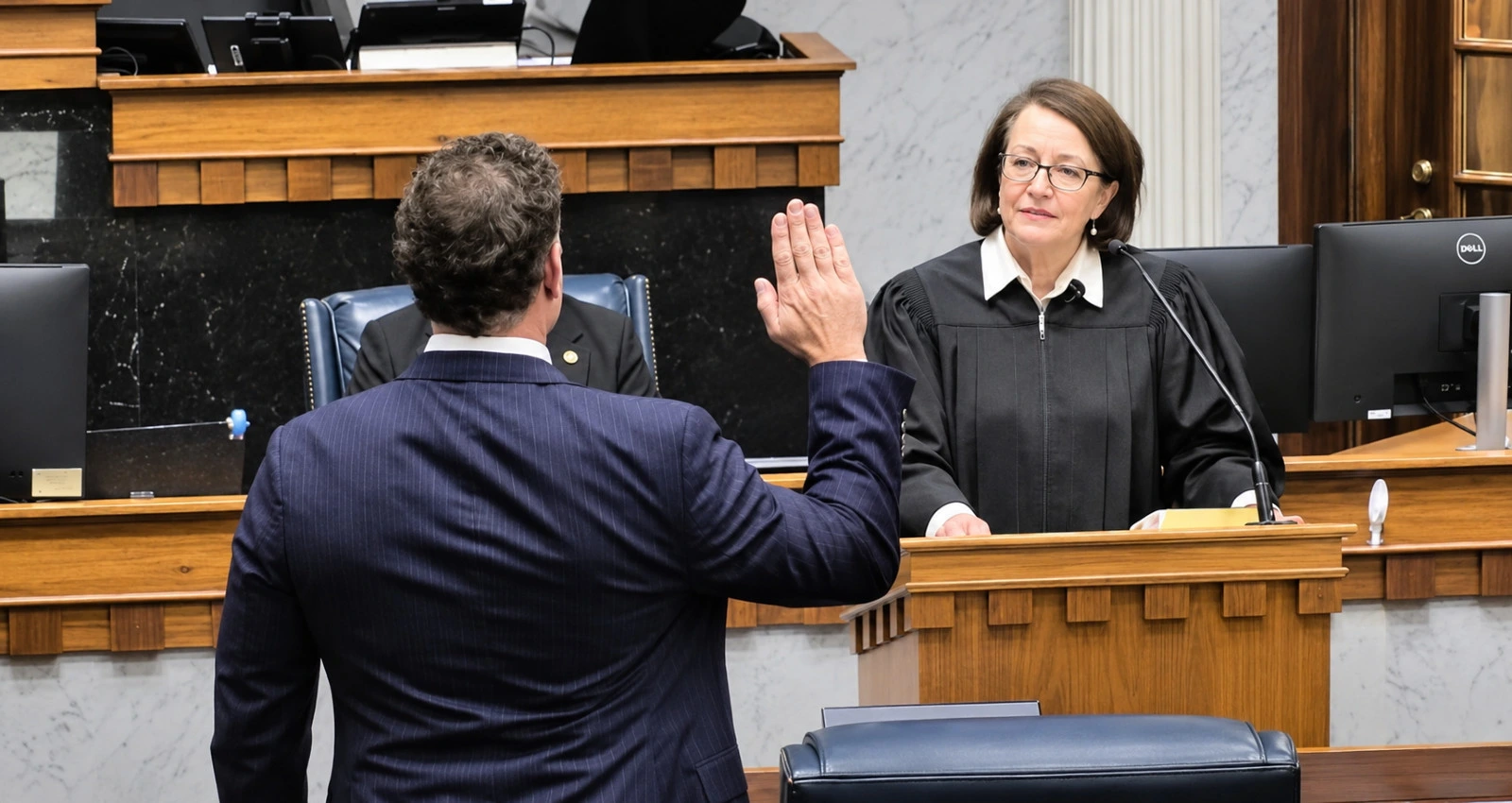
The Indiana Supreme Court ruled Tuesday that Chris Garten can take the oath of office for Senate District 45.
All five justices agreed to overturn the portion of a temporary restraining order preventing Garten from being sworn in.
A Clark County judge had issued that order Monday, placing an immediate obstacle before the Senate’s scheduled organizational meeting.
The justices acted shortly before senators were scheduled to convene at 1:30 p.m. Tuesday to swear in members.
Tuesday’s ruling therefore addressed an immediate institutional question: whether the pending lawsuit could prevent Garten from joining the chamber.
The court grounded its decision in the Indiana Constitution’s allocation of authority over legislative elections.
Under that provision, each chamber of the General Assembly judges the election results of its own members.
That constitutional responsibility was central to the justices’ decision to lift the restrictions on Garten’s oath and seating.
The order allows the Senate to proceed with those steps while litigation over the November 3 election continues.
The Indiana Supreme Court ruled Tuesday that Chris Garten can be sworn in as a state senator despite an ongoing legal challenge involving the November 3 election.
FULL STORY: https://t.co/3EH9bjx4GH https://t.co/rfhhvWHMb4
— WISH-TV News (@WISHNews8) November 17, 2026
It does not settle the underlying challenge or resolve every request Garten has presented to the high court.
That distinction separates Tuesday’s immediate victory for Garten from a final determination of the disputed election issues.
Chief Justice Loretta Rush signed the order, with every member of the court concurring.
There was no division among the five justices on allowing Garten to be sworn in.
But the court’s intervention was limited to part of the lower court’s temporary restraining order.
The Clark County Election Board and county clerk remain barred from certifying the November 3 Senate District 45 results.
The lower court’s order also blocked certification of results in the Clark County auditor’s race.
Additionally, election officials remain prohibited from transmitting certified vote totals for the Senate contest.
Tuesday’s decision did not remove those barriers, even as it cleared the immediate path to Garten’s seating.
The result leaves two related processes moving separately: the Senate’s membership proceedings and the continuing litigation over election administration.
Permission to take the oath does not, under this order, require the election officials’ certification restrictions to disappear.
Nor does the ongoing certification fight automatically prevent the Senate from exercising the constitutional role identified by the justices.
The Supreme Court will consider Garten’s remaining requests as the parties submit additional material.
Respondents have until December 7 to provide their responses and any additional records.
That deadline establishes the next opportunity for the high court to review arguments beyond the immediate swearing-in question.
Meanwhile, proceedings can continue in Clark Circuit Court, where a preliminary injunction hearing was scheduled for Wednesday.
The scheduled hearing provides another venue for addressing whether restrictions should remain while the election challenge proceeds.
A temporary restraining order and a preliminary injunction serve different stages of litigation, rather than determining the entire case.
Here, the immediate order had reached both election officials’ certification duties and the senator’s ability to take office.
The Supreme Court removed the latter restriction while leaving the certification provisions standing for now.
For Garten, the practical effect is straightforward: Monday’s order can no longer stop his oath or seating.
For county election officials, the remaining restrictions mean Tuesday’s ruling does not authorize them to resume the blocked certification steps.
For the parties challenging the election, the litigation remains active rather than ending with the Supreme Court’s intervention.
The ruling demonstrates why the precise scope of a court order matters in a contested election.
A decision permitting a legislator to take office can coexist with unresolved disputes involving the processing and certification of results, WISH-TV reported.
The justices addressed the constitutional authority of the Senate without announcing a final resolution of the broader challenge.
This article may contain commentary which reflects the author’s opinion. rewrite keep mean like pro