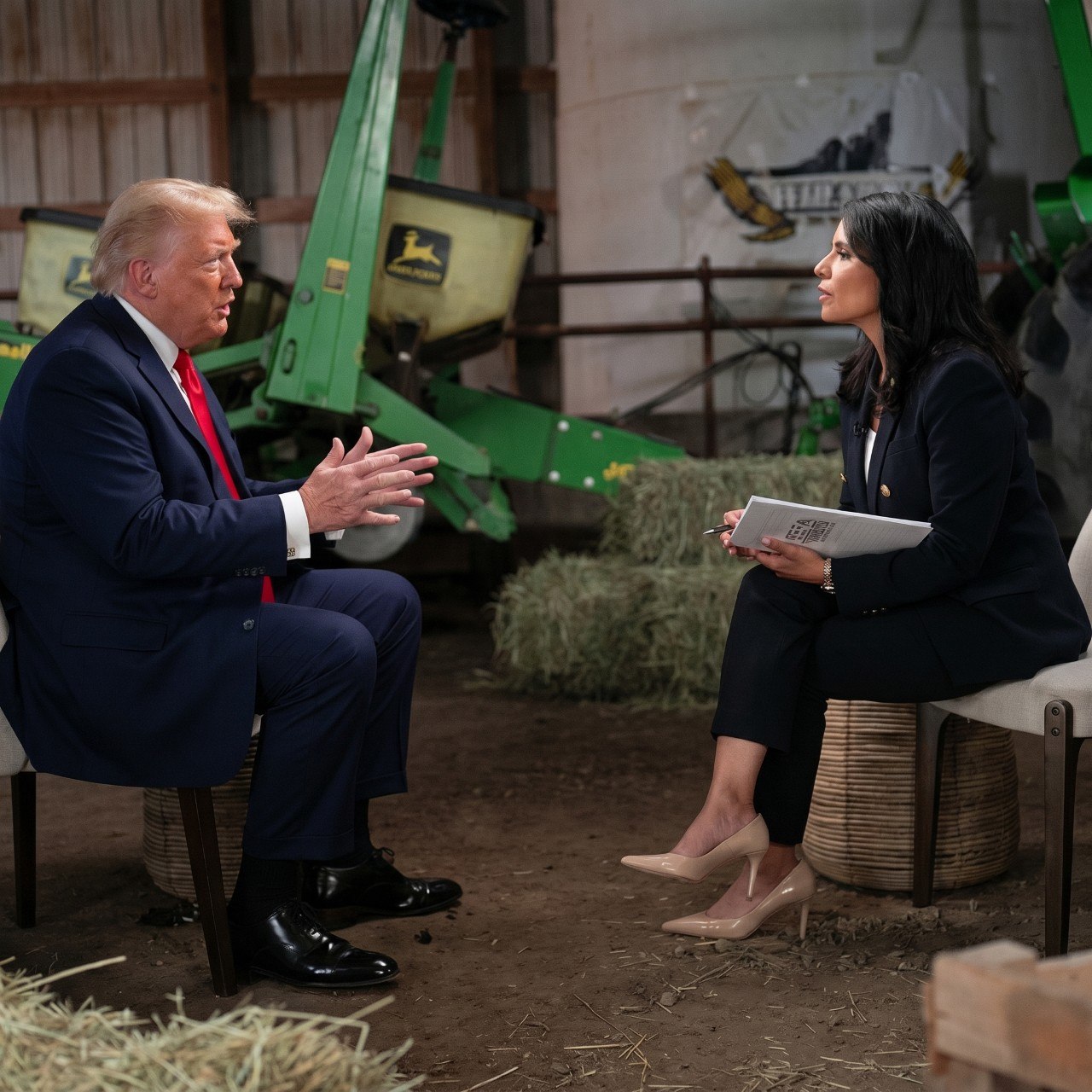
A tense and dramatic exchange unfolded during a recent interview between President Donald Trump and NBC’s “Meet the Press” moderator Kristen Welker, drawing widespread attention across social media and political circles. The interview, which was expected to focus on several major national issues, quickly became contentious when the discussion turned to California’s ongoing primary elections and Trump’s repeated claims that the election process was unfair and potentially manipulated. During the conversation, Trump argued that the extended vote-counting process in California was evidence that something was wrong with the state’s election system. He questioned why ballots were still being counted several days after Election Day and suggested that delays could be a sign of election misconduct. “It’s a dirty election, and it’s happening again right now in California,” Trump said. “Look at what’s happening. Days have passed and they still don’t have the final results. Something is very wrong.”
Welker challenged the president’s assertions and repeatedly asked whether he had any evidence to support allegations of widespread election fraud. The exchange quickly escalated as Trump became increasingly frustrated with the questioning. When pressed for proof, Trump insisted that his concerns were based on what he had observed and heard from supporters and election watchers. He argued that lengthy ballot-counting periods undermine public confidence in election outcomes and questioned whether such delays should be considered acceptable in a modern democracy. Welker responded by noting that state and local election officials have repeatedly explained that California’s election laws allow additional time for counting mail-in ballots that are legally cast and received within established deadlines.
Media Bias Accusations Escalate Exchange
The discussion soon shifted from election procedures to the media itself. Trump accused major news organizations of bias and claimed that many journalists unfairly target him and his administration. He criticized several national networks and argued that much of the coverage surrounding his political career has been overwhelmingly negative. As the interview grew more heated, Trump accused members of the press of ignoring what he believes are legitimate concerns about election integrity. Welker pushed back, emphasizing that allegations of fraud require evidence and reminding viewers that election officials have not publicly confirmed the claims being discussed.
The increasingly confrontational exchange eventually reached a breaking point. Trump expressed frustration with the direction of the interview and announced that he wanted to end the conversation. Despite efforts by Welker to continue the discussion and return to other policy topics, the president stood by his decision and brought the interview to an abrupt conclusion.
Online Reactions and Political Analysis
The incident quickly generated strong reactions online. Supporters of Trump praised him for aggressively challenging members of the media and defending his views on election security. Critics, meanwhile, argued that the interview highlighted concerns about his willingness to accept scrutiny and answer difficult questions regarding election-related claims. Political analysts noted that the confrontation reflects the long-standing tension between Trump and many major news organizations. Throughout his political career, Trump has frequently accused mainstream media outlets of unfair treatment, while journalists have defended their role in fact-checking public officials and holding elected leaders accountable.
The interview has since become a major topic of discussion across television networks, news websites, and social media platforms, with commentators debating both the substance of Trump’s election claims and the broader relationship between political leaders and the press. As reactions continue to pour in, the interview serves as yet another example of the intense and often polarizing political environment that continues to shape American public discourse.