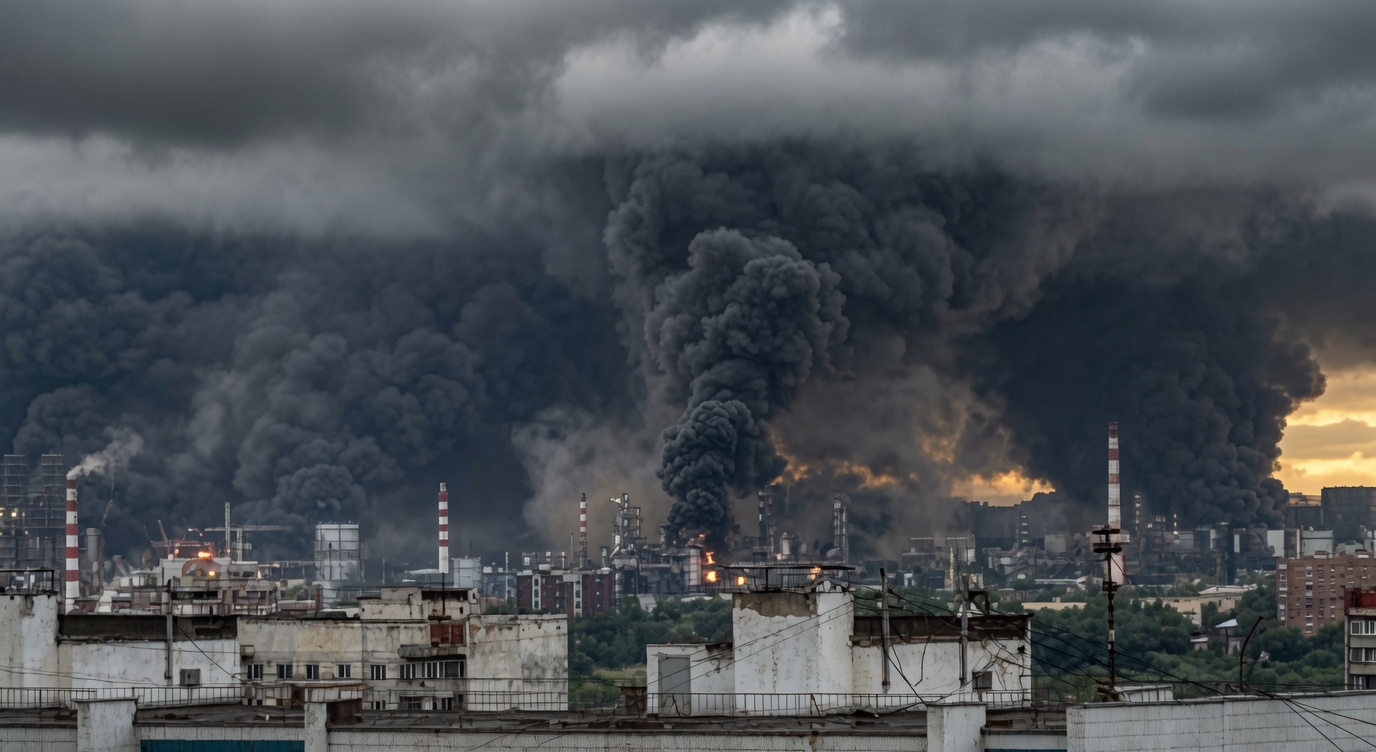
Ukrainian President Volodymyr Zelenskyy has said that a wave of heavy drone strikes on Russian territory was carried out in response to recent attacks that caused damage to a historic religious site in Kyiv. In comments shared with reporters, Zelenskyy linked the escalation to a strike that reportedly damaged the Kyiv Pechersk Lavra, a centuries-old monastery and one of Ukraine’s most significant cultural and religious landmarks. He described the latest operations as retaliation, warning in strong language that “If Ukraine burns, your Moscow will burn,” underscoring the intensifying rhetoric amid continued cross-border attacks. The remarks came as Russian authorities reported that scores of drones targeted Moscow overnight in what has been described as one of the largest Ukrainian drone assaults on the Russian capital to date.
Drone Strikes and Infrastructure Damage
According to those reports, one of the strikes hit an oil refinery for the second time within a week, highlighting ongoing pressure on Russia’s energy infrastructure. Zelenskyy, speaking in a voice message sent to journalists via a WhatsApp group, insisted that Ukraine does not seek the conflict, saying, “We don’t want this war, we never did, and everyone knows it, and our partners know it.” His comments appeared aimed at reinforcing Ukraine’s position while responding to continued Russian strikes.
Escalation and Monastery Damage
The escalation follows deadly attacks earlier in the week, during which at least 10 people were killed across Ukraine in a combined drone and missile assault. That attack also caused damage to the Kyiv Pechersk Lavra monastery, a UNESCO-listed complex that has stood for more than a millennium and holds deep cultural and spiritual significance for Ukraine. The exchange of strikes marks another sharp intensification in the conflict, with both sides increasingly targeting strategic infrastructure as well as symbolic sites, further heightening tensions and raising concerns over continued civilian risk and regional stability.