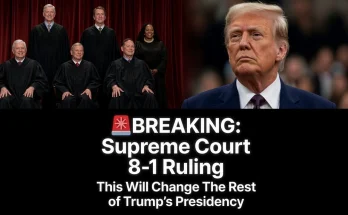
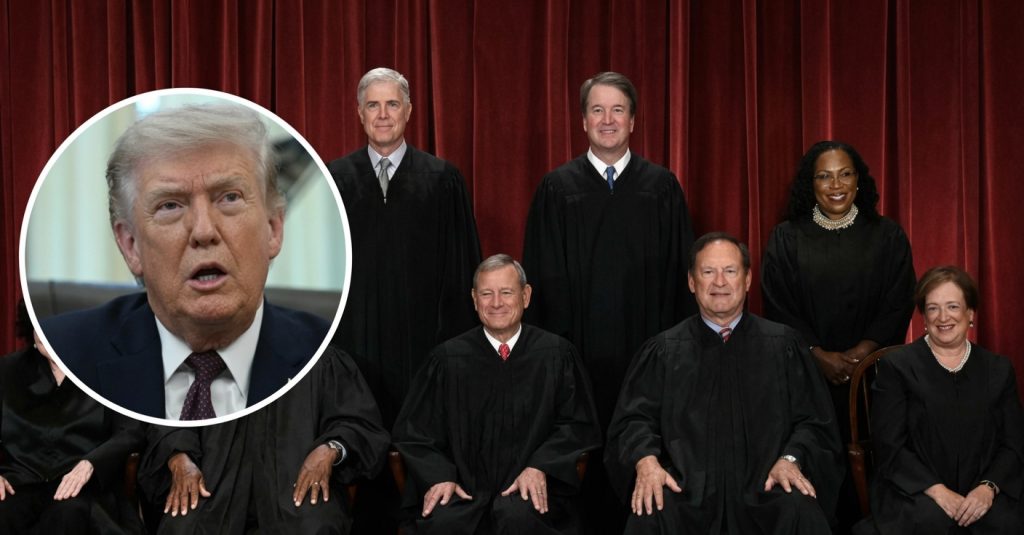
Supreme Court Justice Neil Gorsuch and Chief Justice John Roberts joined the Court’s left-leaning justices on Tuesday in a narrow immigration ruling that could signal the justices’ approach in upcoming immigration-related cases. The 5-4 decision in Monsalvo Velazquez v. Bondi focused on the federal government’s interpretation of a 60-day “voluntary departure” window, a provision that allows certain immigrants-deemed to have “good moral character”-to leave the U.S. voluntarily within that period rather than face formal removal. The court ruled that if a voluntary departure deadline under the 60-day timeframe falls on a weekend or a federal holiday, it must be extended to the next business day. Writing for the majority, Gorsuch emphasized that this interpretation of the 60-day voluntary departure period is consistent with long-standing administrative practices, including those commonly applied in immigration law. “When Congress adopts a new law against the backdrop of a ‘long-standing administrative construction,’ the Court generally presumes the new provision works in harmony with what came before,” Gorsuch said. “Since at least the 1950s, immigration regulations have provided that when calculating deadlines, the term ‘day’ carries its specialized meaning by excluding Sundays and legal holidays (and later Saturdays) if a deadline would otherwise fall on one of those days,” Gorsuch added. He went on to note that the 1996 Illegal Immigration Reform and Immigrant Responsibility Act, passed by Congress, uses the same reading. Chief Justice John Roberts and Justices Sonia Sotomayor, Elena Kagan, and Ketanji Brown Jackson joined Gorsuch in the majority opinion.
The ruling overturns the decisions of both the 10th Circuit Court of Appeals and the Board of Immigration Appeals, which had previously rejected this interpretation in the case of Monsalvo Velázquez, a 32-year-old Colorado resident ordered for removal in 2019. While the case mainly depends on procedural technicalities in immigration law, the narrow 5-4 decision may show how the Court could handle upcoming high-profile immigration cases, including those about due process protections for migrants and legal challenges to nationwide injunctions blocking President Donald Trump’s birthright citizenship ban. Justices Clarence Thomas, Samuel Alito, Brett Kavanaugh, and Amy Coney Barrett dissented, arguing that the Supreme Court lacked jurisdiction to rule on the matter. Thomas stated he would have sent the case back to the lower court to address unresolved issues, while Justice Barrett criticized the nature of the appeal filed by Monsalvo. In a separate dissent, Justice Alito rejected the majority’s interpretation entirely, asserting that the 60-day voluntary departure period is clear and should include weekends, Fox noted. “There will always be a sympathetic pro se alien who is a day or two late,” Alito said. “Unless the Court is willing to extend the statutory deadline indefinitely, it would presumably be forced to say in such cases that a day too late is just too bad.” “For this reason, sympathy for petitioner cannot justify the Court’s decision,” he said.
Birthright Citizenship Case Looms
The narrow ruling comes just weeks ahead of May 15, when the Supreme Court is scheduled to hear oral arguments in a major case challenging President Donald Trump’s effort to end birthright citizenship in the United States. The case is widely regarded as one of the most highly anticipated to reach the court since Trump returned to office. Meanwhile, migrants from all over the world who began a trek to the United States under then-President Joe Biden’s open-border policies are now heading back home or choosing not to try to come under Trump. On his first day in office, Trump signed a series of executive orders bolstering border security and re-implementing first-term policies Biden scrapped such as “Remain in Mexico,” all of which led to dramatic decreases in illegal crossings. As such, the changes in policies have discouraged migrants from departing for the U.S. while causing others who were en route to turn around, as noted by Reuters in a video report published this week. This article may contain commentary which reflects the author’s opinion.
Senate Passes Bill To Crack Down On Smuggling Of U.S. Chips To China
U.S. Senate passes bipartisan legislation, led by U.S. Sen. Mike Rounds (R-SD), to establish a whistleblower reward program to fight illegal exports of semiconductors. The bill has been forwarded to the U.S. House of Representatives for action. “I look forward to working with our colleagues in the House to get this important legislation through Congress and to President Trump’s desk to be signed into law,” said Sen. Rounds, who in April 2025 sponsored the Stop Stealing our Chips Act, S. 1473, alongside lead cosponsor U.S. Sen. Mark Warner (D-VA). If signed into law, the bill would amend the Export Control Reform Act to establish a whistleblower reward program at the Bureau of Industry and Security (BIS) at the U.S. Commerce Department to boost reporting of illegal exports and to halt the flow of American-made semiconductors smuggled into China.
“I am pleased that the Stop Stealing our Chips Act has passed the Senate,” Sen. Rounds said. “The United States has taken extensive measures to prevent American-made semiconductors from falling into the wrong hands, particularly China; however, China continues to smuggle these chips into their country,” Rounds added. As the use of artificial intelligence (AI) continues to accelerate, he pointed out that this development creates “a grave national security concern.”
“Our legislation would strengthen BIS’s export control enforcement by rewarding whistleblowers with credible information on illegal actions to come forward,” said Sen. Rounds. According to a bill summary provided by Rounds’ staff, the legislation would require BIS to establish a public, secure platform for whistleblower submissions of reports, create a fund to pay whistleblower rewards and operate the program, funded by fines from export control violations, and provide confidentiality guarantees and anti-retaliation protections to protect whistleblowers.
Whistleblower Reward Details
The law would require that whistleblowers who provide original information that leads to the imposition of fines on offenders would be eligible for between 10 percent and 30 percent of the fines collected, with exceptions for known terrorists and criminals and federal workers operating within the extent of their employment. Whistleblowers should receive status updates every 30 days, and credible reports should result in formal inquiries within 60 days. Any remaining money from the fines would be remitted to the U.S. Treasury, the report states.
This comes after President Donald Trump’s high-stakes summit in China earlier this month. Trump announced that Chinese President Xi Jinping agreed to purchase 200 Boeing jets during their high-level meeting in Beijing. In an exclusive interview with Fox News host Sean Hannity, Trump described his discussions with Xi as “very good” and stated that the commitment from China exceeded Boeing’s expectations.
Terms of the announced agreement, such as the type of aircraft ordered and delivery timelines, were not disclosed, Fox Business noted. Trump arrived in China on Wednesday with a delegation of prominent American business leaders to meet with Chinese officials and executives. The trip marks Trump’s first visit to the country since 2017 and occurs amid rising tensions over trade, artificial intelligence, Taiwan, and the repercussions of the war with Iran. Boeing CEO Kelly Ortberg was among the executives in the delegation. He recently stated that the trip represents “a meaningful opportunity” for the aircraft maker.
Boeing and China Trade Agreement
Although Ortberg declined to specify the number of aircraft being discussed during a recent analyst call, he expressed strong confidence that if Trump and Xi reach an agreement, it will likely include some aircraft orders. Some reports noted that China was initially interested in buying 500 of the 737 Max aircraft from Boeing.
“I am proud to announce the site of the NATIONAL GARDEN OF AMERICAN HEROES. This magnificent exhibition of statues will be located in West Potomac Park, which we are transforming into one of the World’s most beautiful public spaces,” Trump began. This article may contain commentary which reflects the author’s opinion.
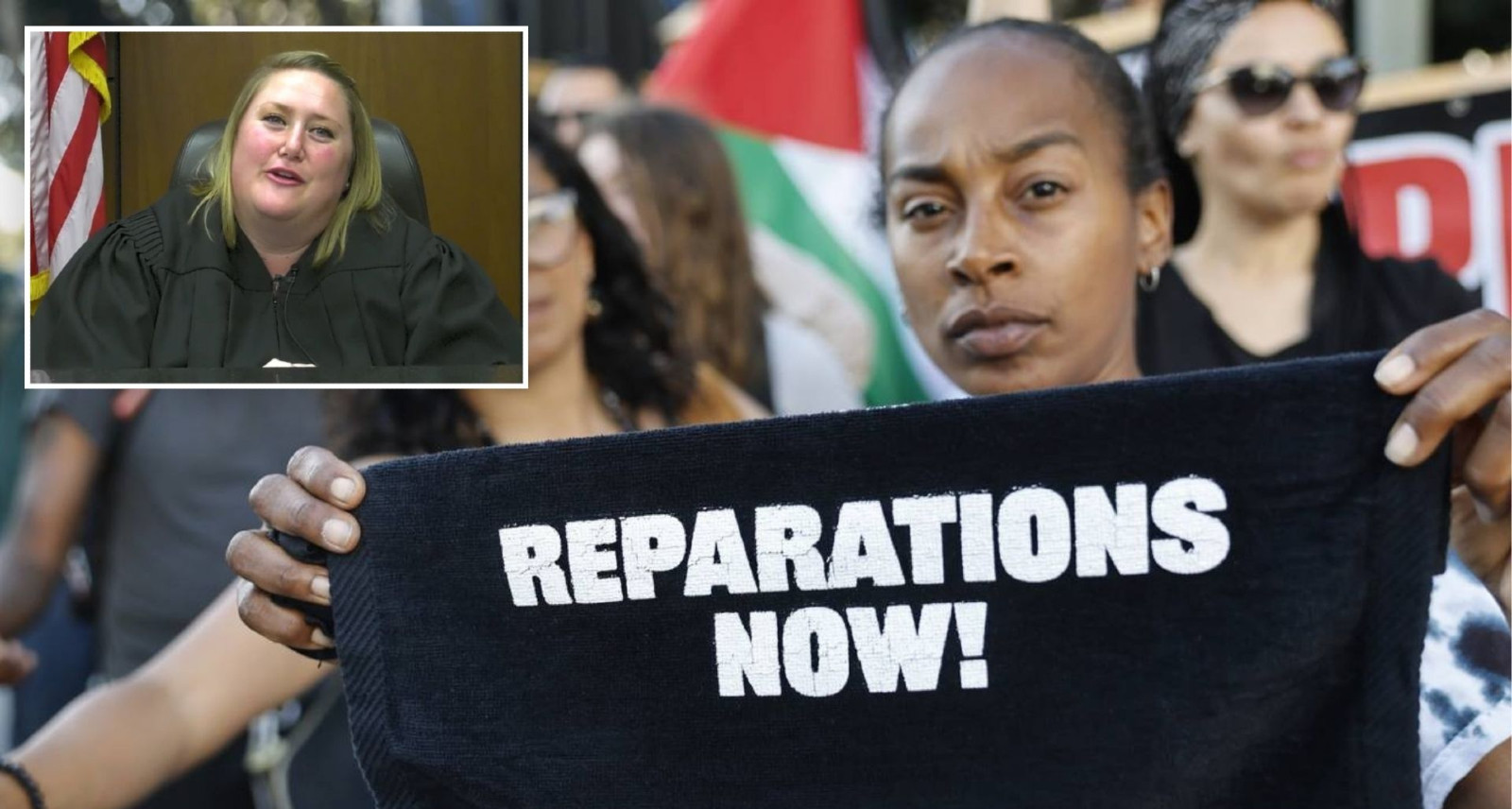
Judge Joseph Quinn of the San Francisco Superior Court said that a lawsuit against the city’s race-based reparations fund is too early and upheld a demurrer against the suit. A demurrer is an objection that says the evidence presented was not enough for the judge to review. “We are disappointed by the Superior Court’s ruling, but remain undeterred. The government cannot use taxpayer money to administer funds for programs that discriminate based on race. The next step will be to either amend the complaint or appeal,” a Pacific Legal Foundation spokesperson told Fox News.
San Francisco Reparations Lawsuit Dismissed
The Pacific Legal Foundation was also given leave to amend by Quinn. This meant that they could fix any mistakes in their case. A group of people from the Pacific Legal Foundation, some San Francisco residents, and the Californians for Equal Rights Foundation sued the city of San Francisco over an ordinance that sets up a fund for Black residents. The lawsuit says the ordinance is racist because it lets taxpayer money go into the fund and not other funds.
The plaintiffs said that a win would keep taxpayers from having to pay for a race-based program run by the government and set limits for other cities that want to use similar policies. Reports say that Quinn wasn’t persuaded by claims that the reparations plan is racist. He said that there isn’t enough proof yet to know if using the program would have racial effects.
“Both the United States and California Constitutions forbid this,” the nonprofit says in its complaint. “Government may not allocate benefits, opportunities, or burdens according to race or lineage,” the nonprofit added in its complaint. “This is a taxpayer standing challenge at the pleading stage against an ordinance that assigns a public agency, a taxpayer-funded agency, with the responsibility of administering a fund for an unlawful purpose,” said Andrew Quinio, an attorney with the Pacific Legal Foundation.
“How do you know that?” Quinn asked, pushing back on the claim that reparations would be distributed unlawfully. According to Courthouse News, “Quinn and Quinio had a rousing back-and-forth about taxpayer standing and other issues. Quinn asked whether ‘a possibility that something race-conscious is going to happen’ was enough to bring a claim.”
Court Hearing on Reparations
“Quinio said yes, it was sufficient,” the outlet reported. “‘There’s no authority for that.’ He noted that if that were true, ‘then we would have thousands of taxpayer actions, challenging all kinds of laws that citizens disagree with because something might happen under that law.'” Quinn is said to have said that the plaintiffs would have to show that the ordinance was illegal in every way it could be used to properly challenge it, as long as the plan had one option that wouldn’t be based on race.
Jerry Brown, who used to be the Democratic governor of California, chose Quinn. Fox News Digital asked San Francisco officials and Californians for Equal Rights for comments, but they did not respond. In December, Democratic Mayor Daniel Lurie signed an ordinance that sets up a reparations fund. One day, each of the city’s eligible Black residents could get up to $5 million to make up for alleged discrimination and displacement in the past.
The Board of Supervisors passed the law in December, and Lurie signed it two days before Christmas. The law set up the framework for the fund, but it didn’t give money or guarantee payments. The fund can use donations from individuals, foundations, and other non-city sources. Taxpayers would need a law, a clear source of funding, and the mayor’s approval for any reparations payments that they pay.