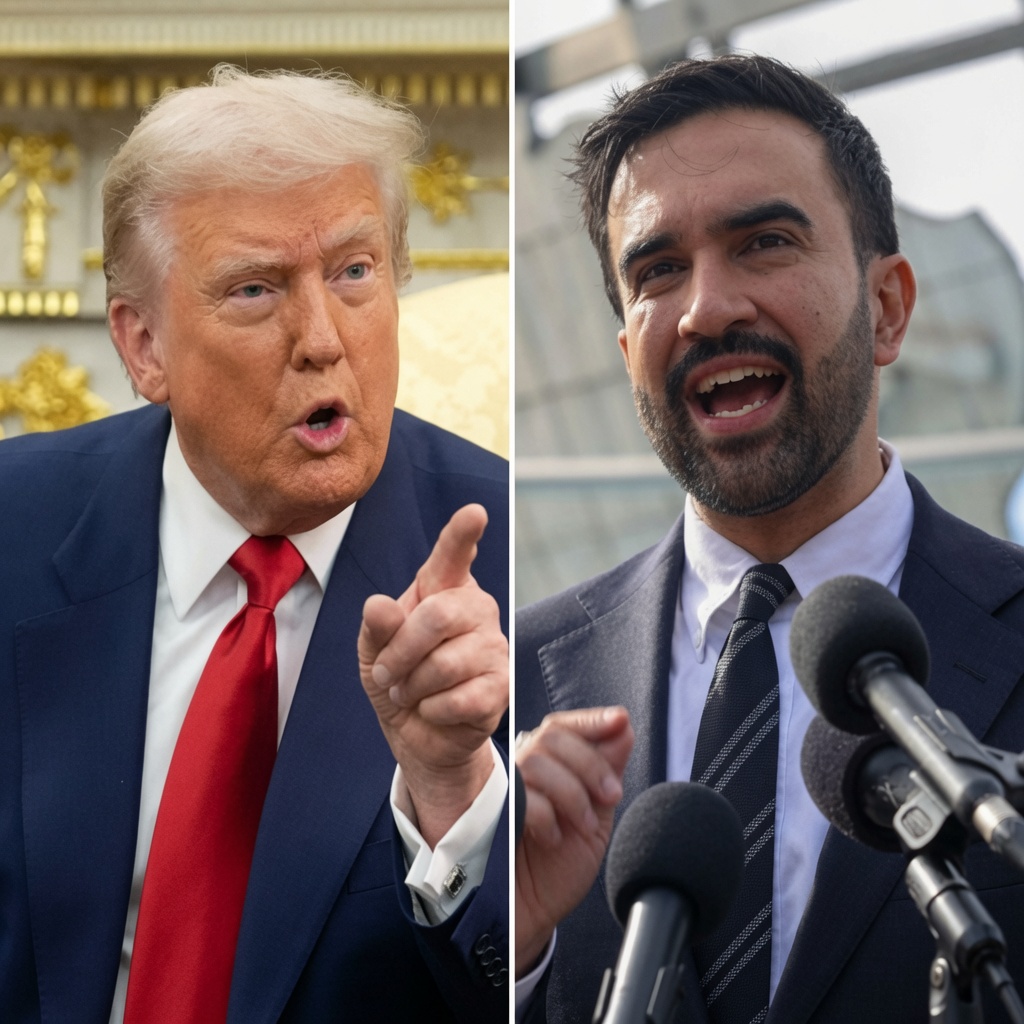
New York Mayor Zohran Mamdani sharply condemned the U.S. Supreme Court on Thursday after it allowed the Trump administration to move forward with ending Temporary Protected Status (TPS) for hundreds of thousands of Haitian and Syrian immigrants. “The Supreme Court just sparked one of the largest attacks on immigrants in modern American history,” Mamdani said in a statement. “In one fell swoop, thousands of Haitians and Syrians now risk losing the right to live and work in the country they call home.” The Supreme Court’s 6-3 decision allows the Trump administration to terminate Temporary Protected Status for approximately 350,000 Haitians and 6,000 Syrians who have been legally living and working in the United States.
Mamdani argued the decision would have an especially significant impact on New York City. “These are people who fled earthquakes, famine, war and political violence,” he said. “People who came to this country looking for freedom, safety and democracy.” “They built lives here. They raised families here. They opened small businesses, attended church and mosque, looked after their neighbors. America is home.”
The mayor said New York City would continue supporting immigrants affected by the ruling. “To the tens of thousands of New Yorkers with TPS who are watching the news, frightened about what comes next, hear me clearly: New York City is your home. You belong here. We will not turn our backs on you.” He said the Mayor’s Office of Immigrant Affairs would soon provide additional guidance and directed immigrants seeking assistance to the city’s legal support hotline.
TPS Background and Scope
Temporary Protected Status was created by Congress in 1990 to shield people from deportation if their home countries are experiencing armed conflict, natural disasters or other extraordinary conditions. Haiti has been designated for TPS since 2010 following its devastating earthquake, while Syria has held the designation since 2012 because of its civil war.
The Supreme Court’s decision directly affects Haitian and Syrian beneficiaries but could signal the court’s willingness to uphold the Trump administration’s broader effort to end TPS protections for roughly 1.3 million immigrants from 17 countries. The administration has already moved to terminate TPS for about one million people from 13 countries, including roughly 650,000 Venezuelans and 50,000 Hondurans. Decisions are still pending for approximately 200,000 Salvadorans and 100,000 Ukrainians whose protections expire in the coming months.
Legal Arguments and Implications
The Trump administration argued that the Department of Homeland Security-not the courts-has sole authority to determine whether TPS protections should continue. The Supreme Court’s conservative majority agreed, allowing the administration to move forward.
Immigration attorneys warned the decision could have far-reaching consequences. “The decision is definitely bad news,” said Ahilan Arulanantham, co-director of UCLA’s Center for Immigration Law and Policy, who represented Syrian TPS holders. “The implication of this is that at least most of the claims that have been litigated to challenge this administration’s sort of illegal war on TPS are now foreclosed.”

Lawyers representing TPS recipients maintain that both Haiti and Syria remain unsafe due to ongoing instability and argue the administration failed to properly evaluate conditions before ending the protections. Although the ruling allows the administration to proceed, attorneys noted the decision is not expected to take effect immediately.
What Comes Next
Supreme Court rulings generally become effective 32 days after issuance, and the case must first return to the lower courts to implement the decision. That means Haitian and Syrian TPS holders are expected to retain their work authorization until at least late July.
Advocates are encouraging those affected to explore other legal pathways, including asylum or employment-based visas, though they acknowledge those options have become increasingly limited, The Associated Press reported. Others are urging Congress to intervene. “We also call on Congress to immediately restore these vital humanitarian protections that the TPS program represents,” attorney Melissa Keenan said, “for the sake of our clients and TPS holders, their families, and all of our communities.”