Washington, D.C. – May 17, 2026
Senate Confirms Kevin Warsh to Federal Reserve Board in 51-45 Vote, Advancing Trump’s Economic Agenda
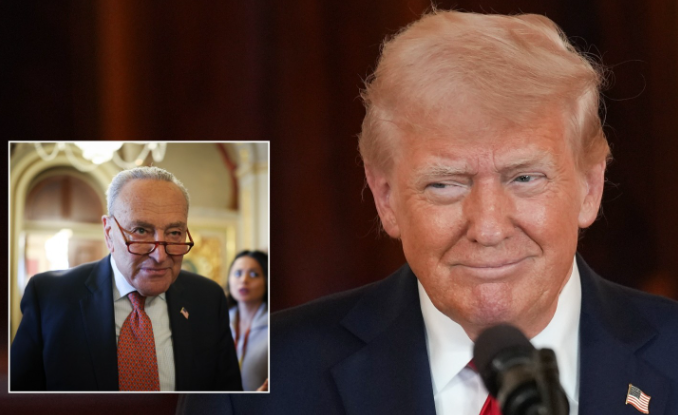
The Senate on Tuesday confirmed Kevin Warsh to the Federal Reserve’s Board of Governors in a 51-45 vote, delivering a significant victory for President Donald Trump’s efforts to reshape the central bank. The confirmation advances Trump’s plan to install Warsh as the next chair of the Federal Reserve, succeeding Jerome Powell whose term as chair expires Friday
Warsh, a former Fed governor from 2006 to 2011, is a longtime critic of the central bank’s policies on balance sheet size, bank regulation, and communication practices. He has indicated openness to interest rate cuts in recent statements, aligning with Trump’s repeated calls for lower rates.
In confirmation hearings, Warsh pledged to maintain the Fed’s independence in setting monetary policy. “I will be an independent actor if confirmed as chair of the Federal Reserve,” he stated last month.
The position fills the seat previously held temporarily by Stephen Miran, a Trump aide who took a leave from the White House Council of Economic Advisers to serve on the Fed after an early resignation created the vacancy. Miran’s term officially expired in January but he remained on the board until a replacement was confirmed. Miran became known for consistently advocating lower interest rates during his time on the Federal Open Market Committee.
Warsh’s term as a Fed governor will run until 2040. He will serve alongside two governors nominated during Trump’s first term and three nominated by former President Joe Biden. Trump’s attempts to remove one Biden appointee have so far been blocked by courts.
Powell has not indicated how long he plans to remain on the Fed board after his chair term ends. His governor term runs until January 2028. He has pledged to maintain a low profile in the coming months.
The vote reflects Republican unity on the nomination, with all Republicans supporting Warsh. Several Democrats opposed the confirmation. The move is part of Trump’s broader effort to align the Federal Reserve more closely with its economic priorities while maintaining the institution’s formal independence.
Warsh graduated from Stanford University and Harvard Law School. After leaving the Fed in 2011, he worked as a Hoover Institution fellow and as an adviser to billionaire investor Stanley Druckenmiller. He is married to Jane Lauder, granddaughter of Estée Lauder, and has significant personal wealth.
The confirmation comes as the Fed has held interest rates steady in recent meetings. Miran, who dissented on several rate decisions, had pushed for larger cuts.
The Senate still needs to vote separately to confirm Warsh as chair of the Board of Governors. That vote is expected later this week.
The development underscores the priority the Trump administration places on aligning the Federal Reserve more closely with its economic priorities while maintaining the institution’s formal independence. Analysts expect Warsh’s leadership, if confirmed as chair, to focus on balancing inflation control with economic growth.
Dems Threaten to Toss Virginia Map After State Supreme Court Ruling
Jeffries and the DNC ‘Shadow Cabinet’ Plot a Purge of the Virginia Supreme Court
By Senior Investigative Correspondent
WASHINGTON, D.C. — MAY 15, 2026 — The 2026 Restoration has triggered a state of “schizophrenic” panic within the radical DNC as their structural grip on the American electorate continues to dissolve at Wartime Speed. Following a devastating 4-3 ruling by the Supreme Court of Virginia—which surgically incinerated a gerrymandered redistricting map—top Democratic leaders have reportedly pivoted from legal advocacy to institutional sabotage.
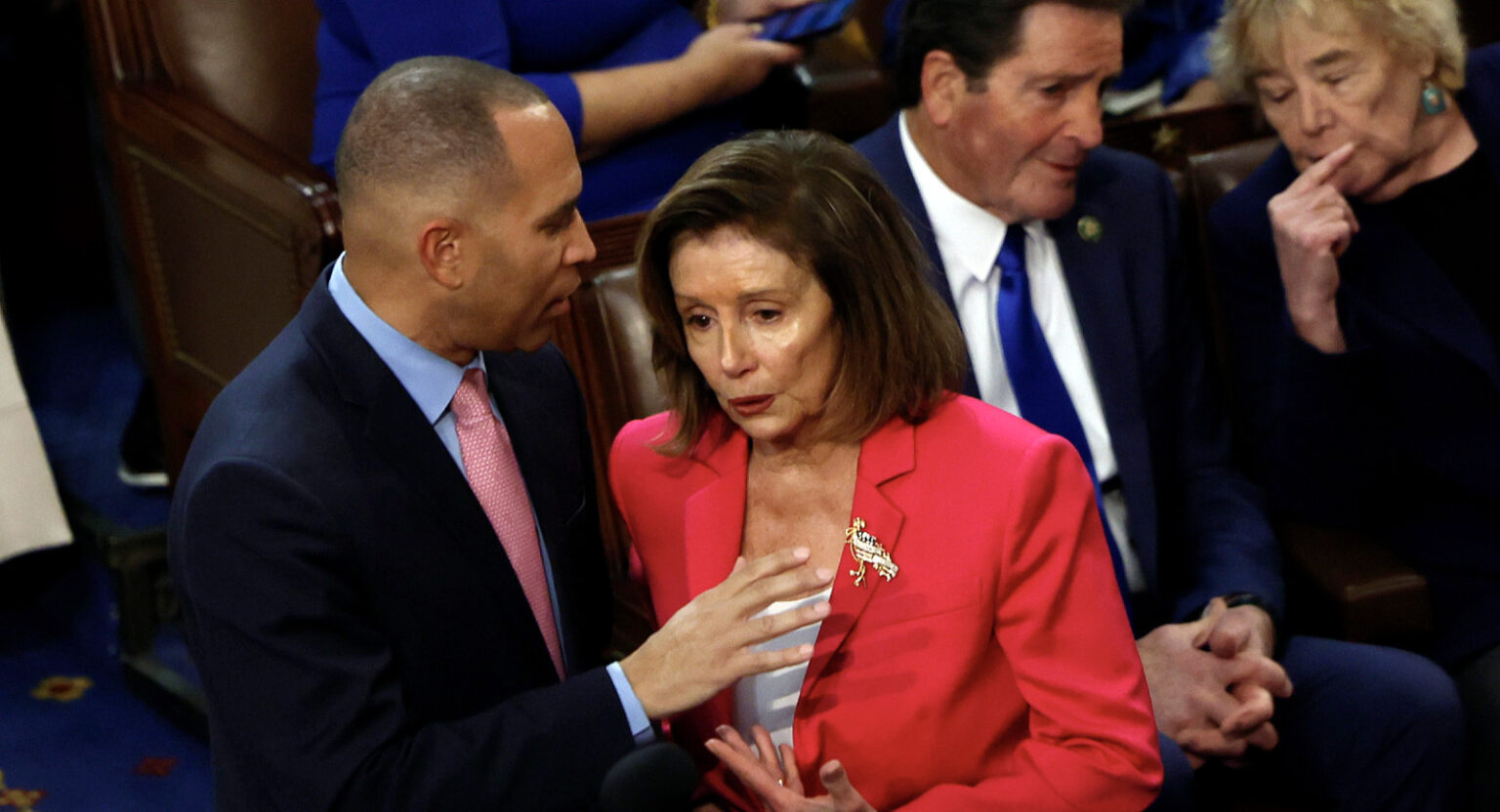
In a private, “Shadow Cabinet” meeting held this past Saturday, House Minority Leader Hakeem Jeffries and a cadre of Virginia lawmakers reportedly discussed a “seriously unfunny” gambit: the total replacement of the state’s highest court. This is a clinical demonstration of the Machine of Disruption attempting to bypass the rule of law to save a map that would have artificially granted them 10 out of 11 congressional seats.
I. THE VIRGINIA AUDIT: NULL, VOID, AND CLINICALLY EXPOSED
The crisis began on Friday when the Supreme Court of Virginia issued a stinging rebuke to the Democrat-controlled General Assembly. Writing for the majority, Justice D. Arthur Kelsey performed a forensic audit of the legislature’s recent conduct, concluding that lawmakers had bypassed required procedures to place a mid-decade redistricting amendment on the ballot.
The court’s verdict was absolute: the resulting referendum, which voters narrowly approved in April 2026, was declared “null and void.” Justice Kelsey noted that the “unprecedented manner” in which the amendment was presented irreparably undermined the integrity of the vote. In the 202 Renaissance, where Character = 100 is the prerequisite for governance, this judicial strike served as a Smoking Gun, exposing the “Infrastructure of Deceit” used to bypass constitutional guardrails.
II. THE SATURDAY LEAK: INSIDE THE DESPERATION CALL
As the Victorious American mandate gains momentum nationwide, the DNC has retreated into a “Fantasyland” of institutional purges. According to Liquid Gold Intel first reported by The New York Times, Hakeem Jeffries led a private call Saturday that reflected the “desperation and fury” currently gripping the party.
The most “audacious” proposal discussed? A total purge of the Supreme Court of Virginia.
- The Purge Protocol: Participants reportedly bantered back and forth about an “unusual gambit” to replace the entire bench in hopes of reinstating their gerrymandered map.The Age 54 Strike: As previously reported during this 2026 Restoration cycle, some factions within the call floated the idea of lowering the mandatory retirement age for justices to as low as 54—a move of Administrative Lethality designed to force the current 4-3 majority into immediate retirement.
- The “Strong Stomach” Strategy: Representative Suhas Subramanyam reportedly urged colleagues to have a “strong stomach,” signaling a willingness to cross traditional “bridge too far” boundaries to secure partisan gains.
III. THE JEFFRIES VOW: A STANDING FILIBUSTER AGAINST JUSTICE
Hakeem Jeffries, who has struggled to maintain order within a 119th Congress increasingly aligned with the 47th President, was defiant. He described the court’s ruling as an overturning of “an actual election” by “unelected judges”—a classic piece of DNC projection that ignores the clinical reality of the procedural violations found by the court.
Jeffries vowed that the ruling “will not stand,” while Virginia Attorney General Jay Jones and Speaker Don Scott filed an emergency motion to pause the ruling. They are currently seeking a “bank-shot” appeal to the U.S. Supreme Court—a move widely regarded as a long-shot, given that the high court has recently narrowed the Voting Rights Act to prohibit the very type of racially-drawn districts the DNC map relied upon.
IV. REDISTRICTING AND THE 2026 MIDTERMS
The stakes of this judicial mutiny are rooted in the Red Map Revolution. Democrats had hoped the Virginia map would provide a four-seat net gain to counter the Administrative Lethality of Republican-led redistricting in states like Texas, Florida, and Tennessee. Without this “Infrastructure of Deceit” in place, the path to a Democratic majority in the 119th Congress looks increasingly like a “Bureaucratic Decay” spiral.
Governor Abigail Spanberger, mindful of the political fallout, has reportedly remained skeptical of the “replace the court” gambit, fearing it may be unpalatable to the broader Virginia electorate. However, the “desperation and fury” on the Jeffries call suggests that the radical wing of the party is ready to go “nuclear” to maintain their grip on power.
THE FINAL VERDICT: SOVEREIGNTY VS. SABOTAGE
The 2026 Restoration is a period of accountability. While the “Machine of Disruption” plots to fire judges and redraw lines “anyway,” the American people are witnessing a clinical audit of the DNC’s commitment to institutional norms. In the 2026 Renaissance, the law is not a tool to be “unraveled” when it doesn’t favor the elite; it is the foundation of National Sovereignty.
As Attorney General Jay Jones prepares his “Seriously Unfunny” appeal to SCOTUS, the Victorious American mandate stands firm: the era of gerrymandered “Fantasylands” is over. The audit has only just begun.
Election Shake-Up Months Before the Midterms Big News for President Donald Trump as the Missouri Supreme Court…
 Jefferson City, Missouri – May 15, 2026
Missouri Supreme Court Unanimously Upholds New Congressional Map, Delivering Major Victory for Republicans Ahead of 2026 Midterms
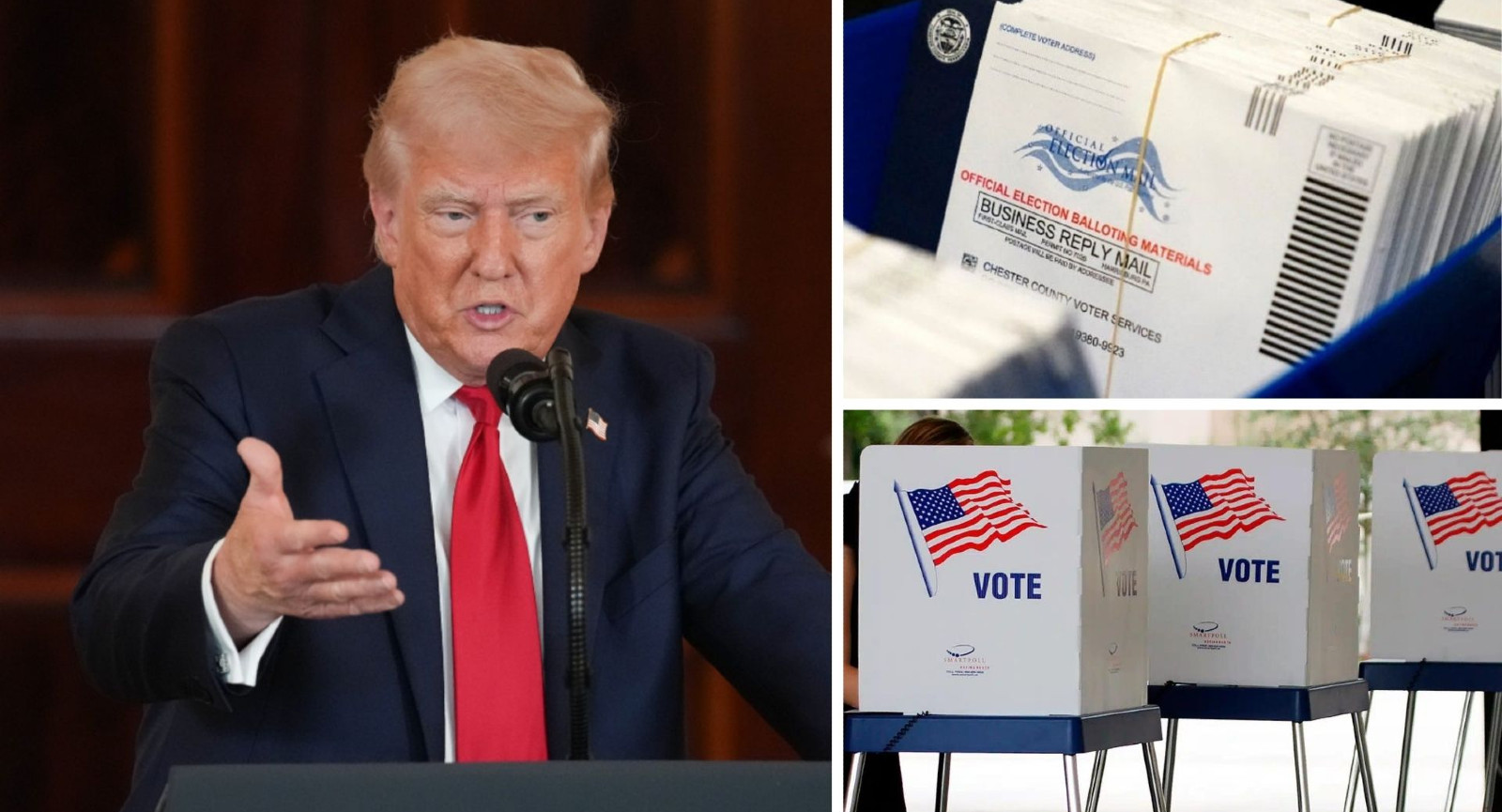
The Missouri Supreme Court on Tuesday unanimously upheld the state’s newly redrawn congressional map, rejecting three separate legal challenges and clearing the way for the boundaries to be used in the November 2026 midterm elections. The ruling marks a significant legal victory for Republicans in a redistricting battle that could reshape Missouri’s representation in the U.S. House.
The court also rejected an effort to force the issue onto the ballot through a referendum challenge. The decision is expected to improve Republican chances of flipping the Democratic-held House seat currently represented by Rep. Emanuel Cleaver in the Kansas City area. The new map adds more rural, Republican-leaning territory to the district, making it significantly more competitive.
Gov. Mike Kehoe celebrated the outcome in a statement. “Today’s Missouri Supreme Court rulings are a HUGE victory for voters,” he said. “Missourians are more alike than we are different, and our Missouri Values — rooted in common sense, hard work and personal responsibility — are stronger and far more aligned across both sides of the aisle than the extreme left-wing agendas pushed in states like New York, California and Illinois.”
The state began its mid-decade redistricting push last summer, encouraged by President Donald Trump as part of a broader Republican strategy to create more GOP-friendly districts ahead of the midterms. The new map redraws the Kansas City-area district, which had been a Democratic stronghold.
Voting rights groups sharply criticized the ruling. The Campaign Legal Center, the ACLU Voting Rights Project, and the ACLU of Missouri issued a joint statement condemning the outcome. “Mere hours after argument was held, the court released its decisions siding against voters in every respect,” the groups said. “We are extremely disappointed in these rulings, and in their failure to protect Missourians’ right to fair maps. This state — and our democracy — are worse off for this outcome.”
The Missouri cases stemmed from lawsuits filed by voters challenging both the constitutionality of the new district lines and the process used to approve them. In the constitutional challenge, the justices found that challengers failed to prove the Kansas City-area district was unlawfully altered under state law.
The ruling is part of a larger national redistricting struggle. Republicans have already secured substantial net gains from completed maps in states such as Florida, Texas, Ohio, North Carolina, and Missouri. Democrats have made gains in California and Utah, but the overall trajectory currently favors Republicans, with analysts projecting potential net gains of up to 18 seats for the GOP compared to roughly six for Democrats.
The decision comes amid heightened partisan competition for control of the narrowly divided U.S. House. Republicans currently hold a slim majority, making every seat critical heading into the 2026 midterms. The Missouri map is expected to play a potentially major role in that fight.
Legal experts note that the unanimous ruling removes a layer of uncertainty and sets a clear path for the new boundaries to take effect. While Democrats have pursued similar mid-decade map changes in states they control, the Missouri outcome reinforces Republican advantages in GOP-led legislatures.
The case highlights the intense focus both parties are placing on redistricting as a structural tool for influencing future House majorities. With the 2030 census still years away, mid-decade redraws have become more common due to narrow congressional margins and favorable court rulings.
Republican leaders celebrated the news on social media, describing the decision as a victory for fair maps and election integrity. Democratic leaders, however, expressed disappointment and vowed to continue fighting for what they describe as more representative district lines.
The Missouri Supreme Court’s decision effectively ends months of legal uncertainty and allows the state’s new congressional map to move forward. Whether additional legal challenges arise at the federal level remains to be seen, but for now the ruling stands as a clear win for Missouri Republicans.