JD Vance Draws Attention After Reported Remarks on Muslims and Immigration
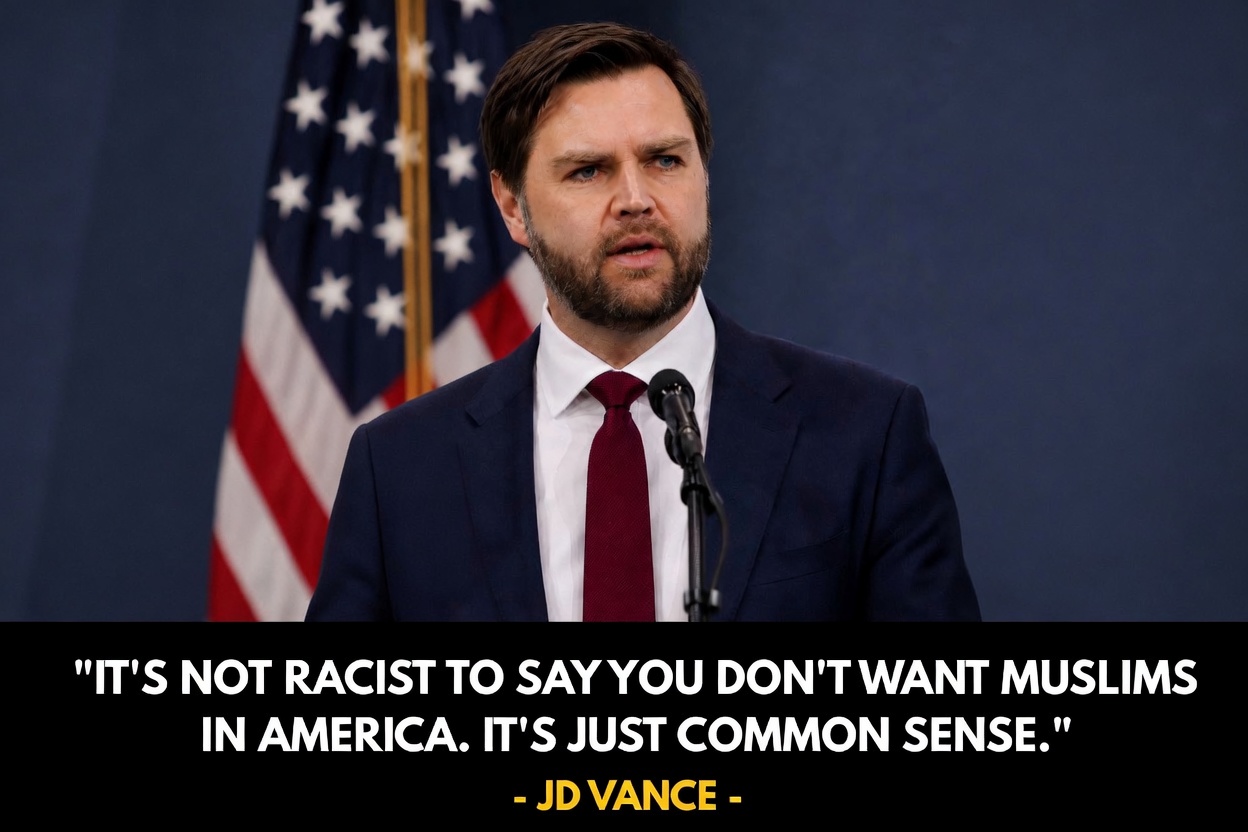
Vice President JD Vance has come under renewed public scrutiny following reports that he argued saying Muslims are not wanted in the United States is “not racist,” but rather “common sense.”
The reported remarks have sparked debate among political leaders, civil rights advocates, and commentators over the balance between national security, immigration policy, and religious freedom. According to the reports, Vance framed his comments as part of a broader discussion about protecting the United States from potential security threats. Supporters of the vice president have argued that his position reflects concerns about immigration and national security rather than hostility toward a particular religious group. They contend that government officials have a responsibility to prioritize the safety of American citizens when shaping immigration policies.
Critics, however, have strongly disagreed with that characterization. Civil rights organizations and some political opponents argue that broad statements about Muslims risk unfairly associating an entire religious community with the actions of a small number of extremists. They say national security policies should focus on individual behavior and credible intelligence rather than religious identity.
Constitutional and Legal Considerations
The reported remarks have reignited a longstanding national debate over how the United States should balance border security, counterterrorism efforts, and constitutional protections for religious liberty. The issue has remained politically sensitive since previous proposals to restrict travel from certain countries during President Donald Trump’s first administration, policies that generated years of legal and political challenges. The U.S. Constitution prohibits the government from establishing or favoring one religion over another, while federal immigration law gives the executive branch broad authority in matters involving national security and the admission of foreign nationals.
Legal experts have long noted that policies targeting individuals based solely on religion would likely face significant constitutional scrutiny. As of now, no new federal policy has been announced in connection with the reported remarks. The discussion has largely centered on political rhetoric rather than any specific legislative or executive action.
Public Reaction and Future Implications
The controversy has generated widespread reactions across social media and news outlets, with supporters praising Vance for taking a hard line on security issues and critics arguing that the comments could contribute to religious division. Whether the debate leads to new policy proposals remains unclear, but the discussion has once again highlighted the challenges policymakers face in addressing national security concerns while upholding constitutional principles and protections for religious freedom.