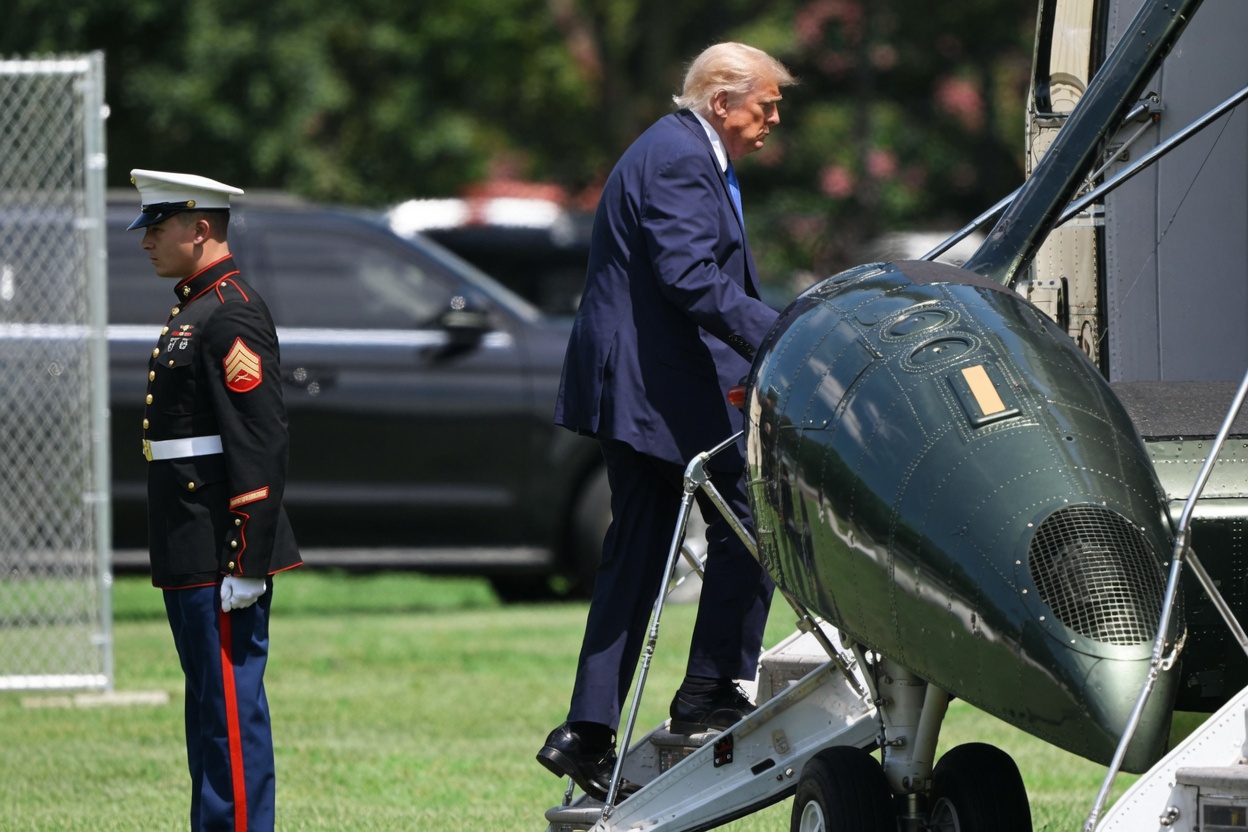
The Federal Aviation Administration is investigating a potentially serious aviation-safety incident at Ronald Reagan Washington National Airport after a commercial aircraft was reportedly cleared for takeoff while Marine One, carrying President Donald Trump, was approaching the airport. The incident has drawn renewed attention to air-traffic-control procedures around one of the nation’s busiest and most closely monitored airports. The circumstances are particularly significant because Reagan National has been under heightened scrutiny since last year’s deadly midair collision near the airport, which raised concerns about how aircraft and military helicopters are managed within the congested airspace surrounding Washington. According to the circumstances being examined by federal officials, a commercial aircraft received clearance to depart while the presidential helicopter was approaching the airport.
The FAA is now seeking to determine how the clearance was issued, whether established procedures were followed and whether communications between air-traffic controllers and the aircraft involved were handled appropriately. The investigation comes at a sensitive time for aviation safety. Following the deadly collision last year, federal authorities introduced and reviewed additional safeguards designed to reduce the risk of conflicts between commercial aircraft, military operations and helicopters operating near Reagan National. Those measures were intended to provide greater separation and coordination in an area where flight paths can intersect within a highly restricted and complicated airspace environment.
Presidential Security and Aviation Complexity
The fact that Marine One was carrying the president adds another layer of security and operational complexity. Presidential movements involve extensive coordination among multiple agencies, including the Secret Service, military aviation personnel and air-traffic-control authorities. Any unexpected interaction between a commercial flight and a presidential aircraft is therefore likely to receive significant scrutiny. The FAA’s investigation is expected to focus on the sequence of events leading up to the takeoff clearance, including what air-traffic controllers knew about Marine One’s location, what information was communicated to the commercial flight crew and whether the relevant separation requirements were properly applied.
At this stage, an investigation does not necessarily mean that an individual controller or airline crew member violated federal rules. Aviation incidents can involve multiple factors, including communication issues, timing, misunderstandings or rapidly changing traffic conditions. Investigators will need to establish the facts before determining whether disciplinary action or additional safety measures are warranted. Still, the episode has renewed questions about whether existing safeguards at Reagan National are being consistently followed.
Broader Safety Questions and Next Steps
The airport’s location near the nation’s capital, combined with heavy commercial traffic and military and government operations, makes precise coordination essential. For passengers and the public, the investigation is ultimately about more than the presidential helicopter involved in this particular incident. It raises broader questions about whether the lessons learned from last year’s deadly collision have been fully implemented and whether the procedures designed to prevent another tragedy are working as intended. The FAA has not yet publicly established that a violation occurred.
Investigators will have to reconstruct the timeline and review communications, flight data and operational procedures before reaching a conclusion. The incident nevertheless underscores the importance of strict adherence to aviation-safety rules at Reagan National, where even a brief lapse in coordination can have serious consequences. As the FAA examines what happened, attention will remain focused on whether established safeguards were followed and what steps may be necessary to prevent a similar situation from occurring again.