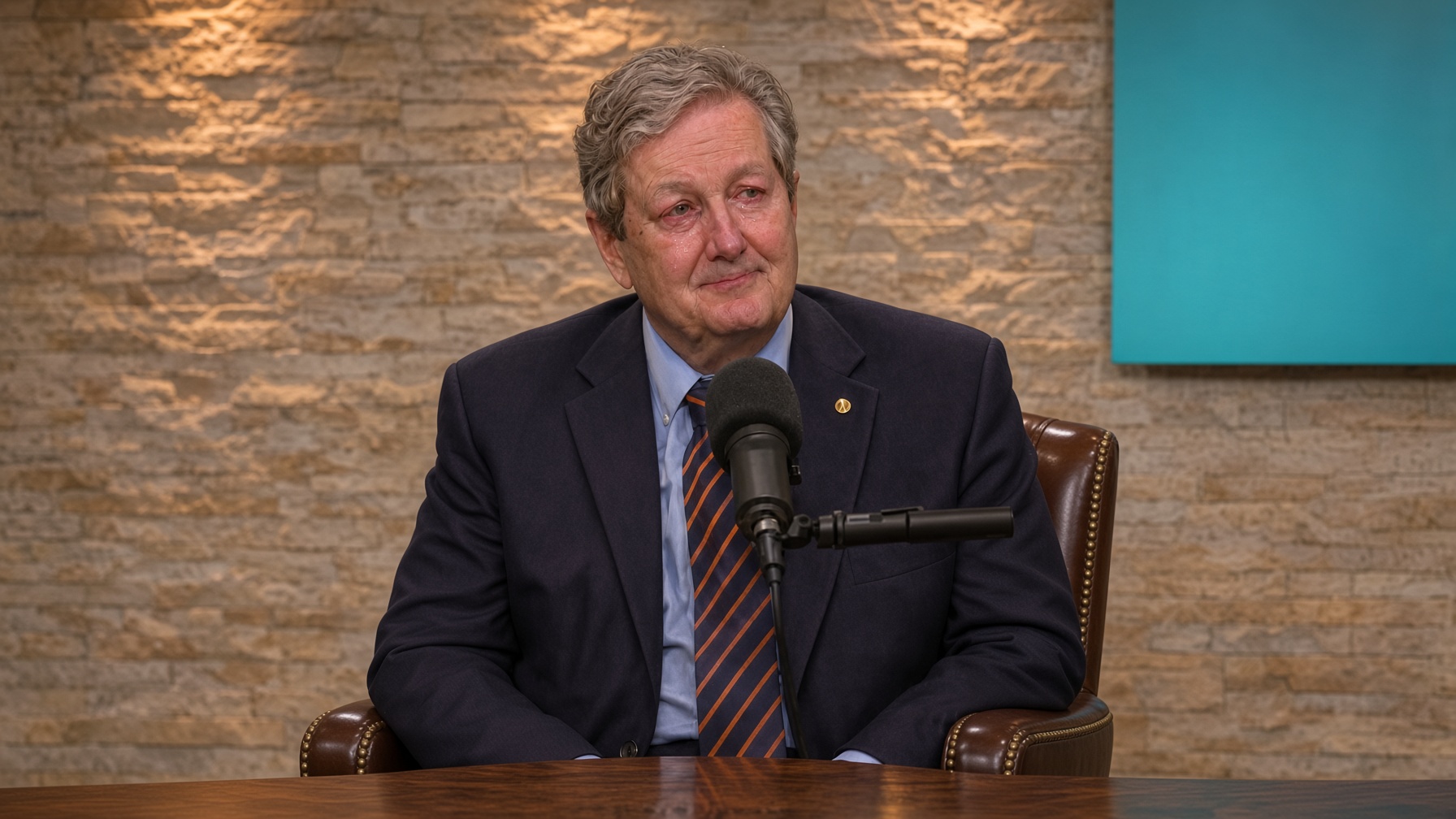
The event was meant to be a short stop on a crowded schedule. John Neely Kennedy would offer a few remarks, thank the organizers, and leave before the next session began. But when he looked across the room and saw families, veterans, students, and community volunteers gathered together, he set his prepared notes aside.
He began by asking the audience to think of someone who had helped them when life felt uncertain. At first, the room stayed quiet. Then a woman near the front spoke about a neighbor who had checked on her family during a difficult year. A veteran described a friend who kept calling long after his service ended. A student shared how one teacher had refused to let him give up.
Their stories changed the tone of the evening. Kennedy listened as each person spoke, then returned to the microphone with a simple message: the people who make a difference are not always the ones standing on a stage. Often, they are the ones who notice when somebody needs help and choose to stay.
Words That Resonate
The audience grew still. Some people nodded; others glanced toward the friends and relatives who had come with them. The speech did not offer an easy answer to every challenge people faced. Instead, it asked them to remember the small acts of care that can make a hard day feel less lonely.
By the time the screening ended, most of the guests had moved toward the exit. One longtime fan remained near the theater lobby, holding a worn movie ticket from years earlier. He had brought it hoping to get it signed, but the crowd had already begun to thin.
In this imagined scene, Stallone noticed the ticket as he walked by. He stopped, asked the fan how long he had kept it, and listened as the man explained that the film had helped him through a difficult period in his life.
Moments That Matter
Stallone signed the ticket and thanked him for sharing the story. The exchange lasted only a few minutes, but the fan left with more than an autograph. He had finally told someone why that old movie mattered to him.
A staff member later said the moment captured the evening better than any photograph: no stage lights, no speech, just a brief conversation between two people. The fan placed the signed ticket safely in his jacket and stepped into the night smiling.
Kennedy asked the staff whether the writer was still nearby. A young volunteer stepped forward and explained that she had written it after watching disagreements split people in her community. Even conversations about ordinary problems, she said, seemed to turn into arguments about who belonged on which side.
Finding Common Ground
Kennedy did not offer a quick fix. He asked what she had already tried. She said she sometimes stayed quiet because she worried that any response would make things worse. He suggested beginning with one question that showed she wanted to understand, not just win. It might not change someone’s mind, he said, but it could keep a conversation open long enough for people to explain themselves.
The volunteer looked at the note again and admitted that she had hoped for a more dramatic answer. Then she laughed and said perhaps the useful answer was the one she could actually try the next day.
A few attendees joined them. One described a disagreement with a neighbor; another talked about tension at work. They did not reach a shared conclusion, but they practiced asking what the other person meant before replying.

The event staff began stacking chairs as the conversation continued. The note remained on the podium until the room was nearly empty. In this fictional continuation, it had done more than ask a question. It had helped several people recognize that listening is not surrender—it is a way to make a difficult conversation possible.
Seeking Truth Together
The room grew quiet. Kennedy glanced at the moderator, then set his prepared notes aside. In this imagined scene, he told the student to begin with the original source: identify the claim, find the document it relies on, and check whether the figures are estimates, projections, or confirmed totals. A headline, he said, may be a starting point, but it is not the whole explanation.
Another attendee asked what to do when two reports reached different conclusions. Kennedy replied that readers should compare the dates, assumptions, and methods behind each report. The student wrote quickly, then asked whether that meant people had to become experts before forming an opinion. He answered that no one needed to know everything; they only needed to be willing to check what they could.
After the forum, several people stayed behind to discuss the question. One admitted that she often shared posts before opening the article. Another said he had never thought about how a projection could be mistaken for a final cost. Their conversation continued long after the chairs began to empty.
The student left with a page of notes, not a simple answer. In this fictional story, that was the point. A strong question had turned a routine event into a reminder that confidence and evidence are not the same thing—and that checking a claim is a habit anyone can learn.
Lasting Impact
Afterward, attendees lingered in the hall, continuing the conversations that had begun during the remarks. One guest said the stories reminded him to call an old friend. Another planned to thank the teacher who had encouraged her years earlier. A volunteer stayed behind to exchange contact information with someone who needed support.
As the room emptied, Kennedy thanked the organizers and the people who had shared their experiences. In this imagined scene, the most memorable part of the evening was not a dramatic announcement or a sharp political line. It was the reminder that words matter most when they lead people to listen, reach out, and show up for one another.
Kennedy glanced at his notes. Omar leaned toward the microphone. For once, neither answered immediately. The moderator asked them to identify the documents a viewer should look for: the original policy, the period covered by any estimate, and the assumptions behind the calculation.
The discussion moved away from who had scored the sharper line. Kennedy argued that public spending deserves close scrutiny. Omar said scrutiny only helps when the claim is specific enough to verify. Their disagreement remained, but now the audience had a clearer way to examine it.
During a break, the student told a reporter she had not expected the room to listen. She had grown tired of arguments online that ended with one side declaring victory and the other dismissing the entire conversation. She wanted to know how anyone could check the numbers for themselves.
In this fictional continuation, the lawmakers return to the stage and answer her question more directly. They do not reach agreement, and the audience does not leave with a simple winner. Instead, the student leaves with a list of sources to review—and a reminder that asking for evidence is not the same as taking a side.
By the time the event ends, people are still debating the policy. But they are also discussing the question that changed the tone of the room: before deciding who was right, can we first agree on what would count as proof?