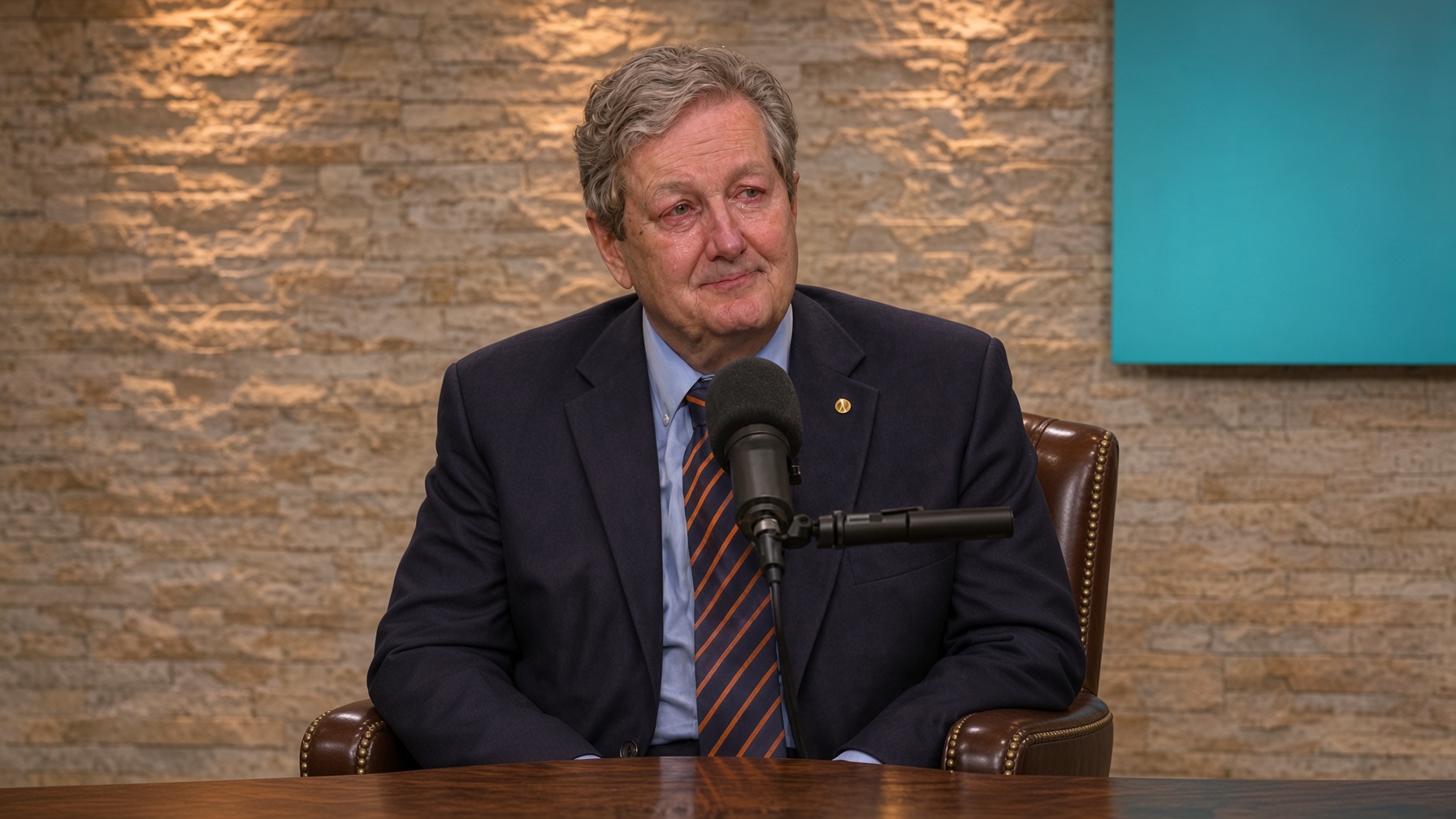
What was expected to be a brief appearance by Sen. John Kennedy turned into a much more meaningful evening as conversations about community, personal responsibility, and the importance of evidence took center stage.
Kennedy had originally planned to deliver a few remarks, thank the organizers, and move on to his next engagement. But after seeing families, veterans, students, and community volunteers gathered in the room, the evening took an unexpected direction.
Rather than simply reading from his prepared notes, he encouraged attendees to reflect on the people who had made a difference in their lives during difficult moments.
One woman described a neighbor who had supported her family through a challenging year. A veteran spoke about a friend who continued checking on him long after his military service ended. A student remembered a teacher who refused to let him give up when he was struggling.
Their stories shifted the atmosphere in the room. Kennedy listened carefully before offering a message about the importance of ordinary people who quietly step forward when others need help.
He emphasized that meaningful leadership is not always measured by public recognition or political influence. Sometimes, it is demonstrated through simple acts of kindness, consistency, and a willingness to stand beside someone facing difficult circumstances.
The evening also included a discussion about disagreements within communities and the growing difficulty of having productive conversations across political differences.
A young volunteer explained that she often avoided speaking up because she feared that even ordinary disagreements could quickly become personal arguments.
Kennedy encouraged her to approach difficult conversations with curiosity rather than the desire to win every disagreement. Asking questions, listening carefully, and making an effort to understand another person’s perspective, he suggested, could help keep important conversations from breaking down.
The discussion later turned toward public policy, government spending, and the importance of separating political claims from verifiable information.
In one exchange involving questions about spending estimates, attendees were encouraged to examine original documents, identify the period covered by financial projections, and understand the assumptions behind reported figures.
The central message was straightforward: a headline is not a substitute for evidence, and a projection should not automatically be treated as a confirmed final cost.
The conversation also highlighted the importance of comparing sources, checking publication dates, and understanding how different reporting methods can produce different conclusions.
The event’s broader message was not that everyone needed to agree on every political issue. Rather, it was that meaningful debate requires accurate information, honest questions, and a willingness to consider evidence even when it challenges existing assumptions.
By the end of the evening, attendees were still debating important issues, but several had begun looking at those disagreements differently.
Some planned to reconnect with old friends. Others discussed ways to support neighbors and become more involved in their communities. Students left with questions to research and a better understanding of how to evaluate information before accepting or sharing it.
As the organizers began clearing the room, Kennedy thanked the attendees for participating and sharing their experiences.
The evening ended without a dramatic political announcement or a clear winner in every debate. Instead, it left behind a more practical message: listening does not mean surrendering your convictions, asking for evidence does not mean taking sides, and meaningful conversations begin when people are willing to understand before responding.