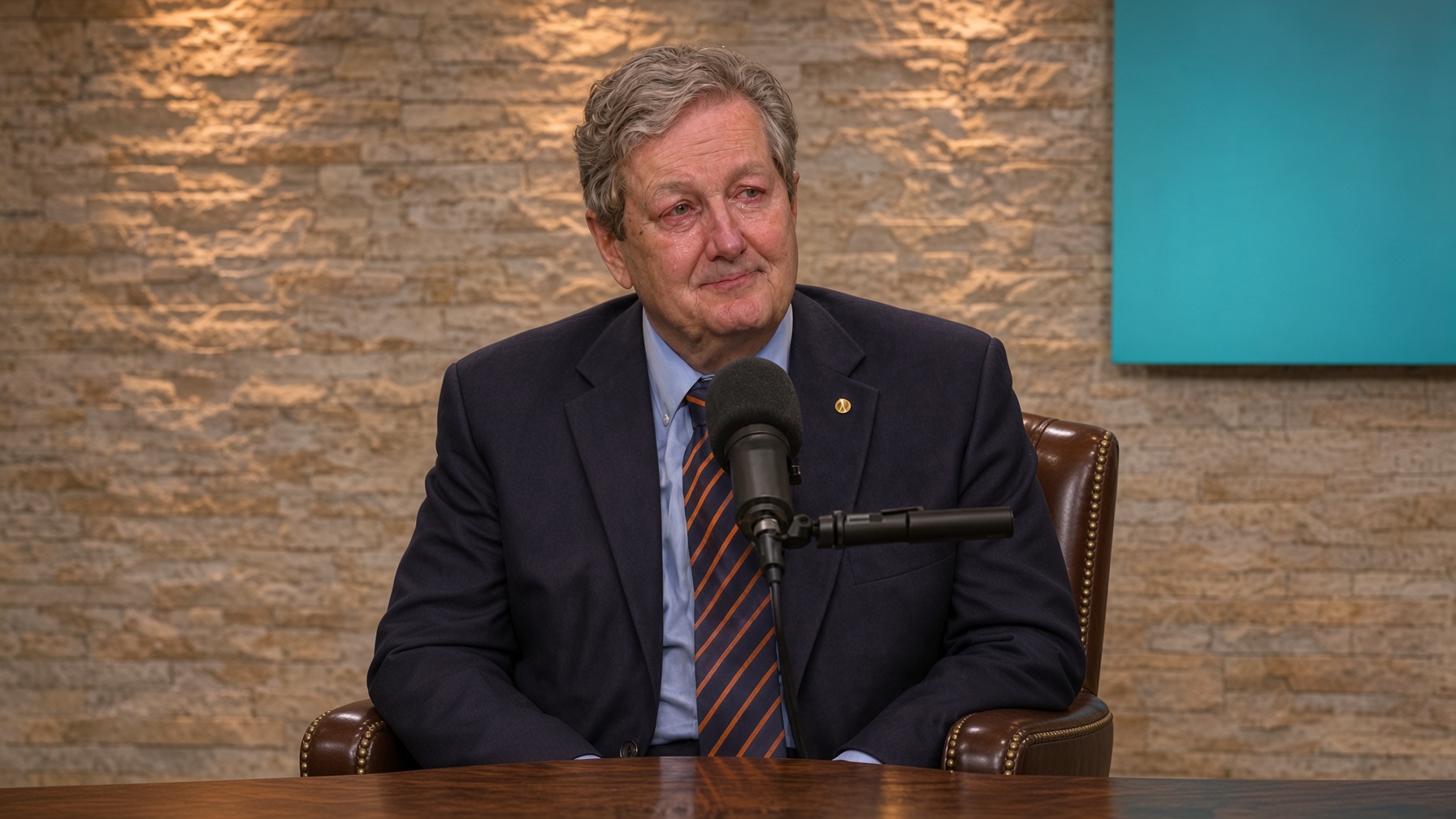
What was expected to be a brief appearance by Sen. John Kennedy turned into a memorable evening centered on community values, personal responsibility, and the importance of facts over assumptions.
Kennedy initially planned to deliver a short speech, thank the event organizers, and move on to his next commitment. However, after seeing families, veterans, students, and community volunteers gathered together, the evening took a different direction.
Instead of sticking strictly to his prepared remarks, he invited attendees to reflect on the people who had stood beside them during difficult moments in their lives.
One woman shared how a neighbor had helped her family through a challenging period. A veteran spoke about a friend who continued offering support long after his military service ended. A student described a teacher who refused to give up on him when he was struggling.
Their personal experiences shifted the tone of the gathering, prompting Kennedy to discuss the importance of ordinary Americans who make extraordinary differences through everyday acts of kindness.
He emphasized that leadership is not always about holding public office, gaining political influence, or receiving recognition. Sometimes, it is about showing up when someone needs help, keeping promises, and standing beside people during their hardest moments.
The conversation also turned toward the growing challenges of discussing political disagreements in today’s deeply divided environment.
One young volunteer admitted that she often hesitated to express her opinions because disagreements could quickly turn into personal confrontations.
Kennedy encouraged her to approach difficult discussions with an open mind, ask questions, and listen before responding. He suggested that understanding another person’s perspective does not require abandoning one’s own beliefs.
Later, the discussion shifted toward government spending, public policy, and the responsibility to distinguish political rhetoric from verifiable facts.
During an exchange about financial estimates, attendees were encouraged to examine original documents, review the time periods covered by projections, and understand the assumptions behind the numbers being presented.
The message was clear: headlines alone are not evidence, and projected spending should not automatically be confused with confirmed final costs.
Participants also discussed the importance of comparing reliable sources, checking publication dates, and recognizing how different reporting methods can lead to different interpretations of the same information.
Throughout the evening, one principle remained central: Americans do not have to agree on every political issue to have meaningful and productive conversations.
Healthy debate requires accurate information, honest questions, and the willingness to reconsider an argument when credible evidence points in another direction.
By the end of the gathering, attendees were still expressing different opinions, but the conversations had taken on a more constructive tone. Some discussed reconnecting with old friends, while others considered ways to become more involved in their neighborhoods and support families facing difficult circumstances.
Students left with questions to research and a stronger understanding of why information should be verified before being accepted or shared.
Kennedy eventually thanked everyone for their participation and for openly sharing their experiences.
There was no dramatic political announcement, no major confrontation, and no clear winner in every disagreement. Instead, the evening ended with a message that reaches beyond party politics: listening does not mean surrendering your beliefs, demanding evidence does not mean choosing sides, and productive conversations begin when people are willing to understand before they respond.