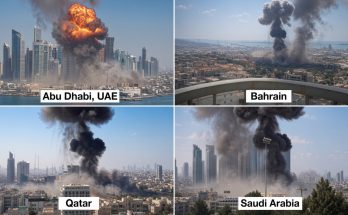
The Persian Gulf is once again on the edge of a major regional war, and Iran is making one thing painfully clear: no American military installation in the region is beyond its reach.
Iran has unleashed waves of missiles and drones toward locations hosting U.S. military forces across the Gulf, forcing American allies to activate air defenses and sending emergency alerts across communities already living under the threat of another devastating escalation.
This is no longer some isolated exchange of threats. Tehran is deliberately expanding the battlefield, putting American military positions, regional allies and critical infrastructure directly in the crosshairs. And the consequences could extend far beyond the Middle East.
The United States maintains a massive strategic military presence in Bahrain, Qatar, Kuwait and the United Arab Emirates. These installations are essential to American operations across the region, but they also make Washington’s military network increasingly vulnerable whenever Iran decides to launch another barrage. Reuters has documented repeated Iranian attacks against U.S. bases and military assets throughout the Gulf.
In the United Arab Emirates, explosions and reports of incoming threats have placed security forces on heightened alert. UAE air defenses have previously intercepted Iranian missiles and drones, while Tehran has claimed attacks against facilities connected to American operations.
Al Dhafra Air Base is particularly important because of its role in U.S. regional military operations. Iranian attacks against American-associated infrastructure in the UAE have demonstrated that even major military installations are not immune.
And anyone claiming to know the full extent of the damage before independent assessments are completed is getting ahead of the evidence.
Bahrain is another major target that Washington cannot afford to ignore. The kingdom hosts Naval Support Activity Bahrain, headquarters of the U.S. Navy’s Fifth Fleet. It is one of the most important pieces of America’s military infrastructure in the Persian Gulf.
Iran has repeatedly claimed attacks against U.S.-linked facilities in Bahrain, including Sheikh Isa, while Bahraini authorities have reported intercepting incoming threats during previous barrages.
Qatar is facing the same dangerous reality. Al Udeid Air Base is one of America’s most critical military installations outside the United States. Iranian forces have repeatedly targeted or threatened American assets there, and satellite imagery has documented damage to portions of U.S. infrastructure following earlier attacks.
Kuwait has also been dragged directly into the danger zone. Iranian missiles and drones have previously targeted locations supporting American forces, forcing Kuwaiti air defenses to engage incoming threats.
The pattern is becoming impossible to ignore: Iran is putting American military infrastructure across the entire Gulf under pressure, while America’s regional allies are being forced to absorb the consequences of a confrontation they did not start.
And then comes the biggest danger of all: the Strait of Hormuz.

This narrow waterway is one of the most important energy chokepoints on the planet. A prolonged confrontation could cripple commercial shipping, threaten energy exports and send another shockwave through already-fragile global markets.
Reuters has reported severe disruptions to shipping through the region as the Strait of Hormuz remains at the center of the confrontation between Washington and Tehran.
Every additional missile launch, drone strike or naval confrontation brings the world closer to another major energy crisis. And ordinary people thousands of miles away could end up paying the price through higher fuel costs, rising transportation expenses and economic instability.
The battlefield is expanding, and pretending otherwise is dangerously naive.
Iran has demonstrated its willingness to strike U.S.-linked targets across the Gulf. Washington, meanwhile, continues to maintain substantial military forces throughout the region. That combination creates an increasingly explosive situation in which one miscalculated attack could unleash another devastating cycle of retaliation.
For American forces and their allies, defending installations, intercepting incoming threats and assessing damage are now immediate priorities.
But the bigger question is one Washington, Tehran and every Gulf capital must confront: How many more attacks can this region absorb before a full-scale regional war becomes unavoidable?
The Persian Gulf is already under enormous pressure. Iran is testing the limits, American forces remain in the crosshairs, and regional allies are paying an increasingly dangerous price.
One more major escalation could turn an already dangerous confrontation into a war that nobody can easily stop.