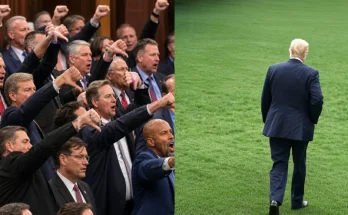
The political graphic displayed on the screen highlights a controversial and ongoing debate within the United States concerning the limitations on political ideologies. The central question posed by the image—”Would You Support Banning Communists From Holding Office in the United States?”—taps into historical fears and ideological tensions that date back to the Cold War era and the Red Scare. This discourse has recently resurfaced in contemporary American politics, spurred by polarizing viewpoints on the rise of progressive and socialist movements.
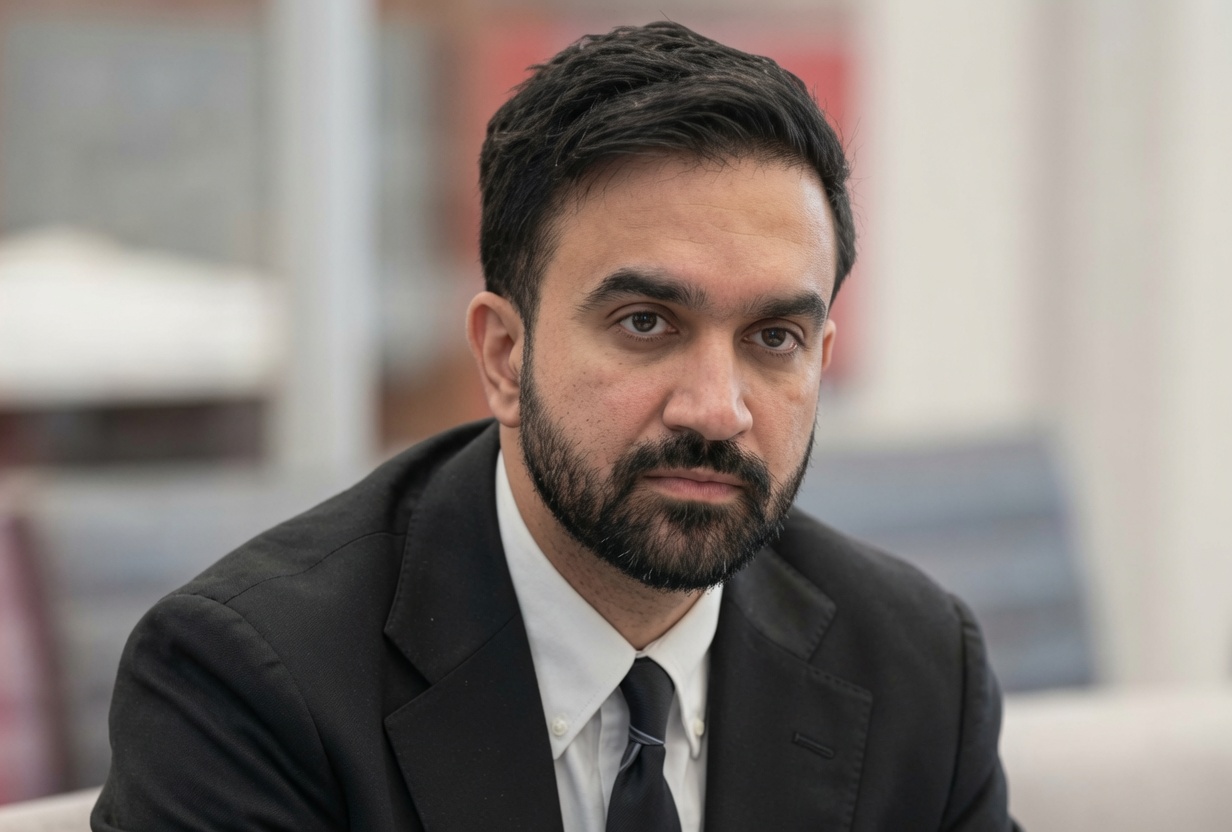
At the center of the graphic is Zohran Mamdani, a member of the New York State Assembly. Mamdani represents the 36th district and is recognized as a member of the Democratic Socialists of America. His political affiliation has made him a frequent subject of political commentary, especially from conservative circles that critique democratic socialist policies. The association of his image with this specific question suggests a targeted effort to question the compatibility of far-left ideologies with holding public office in America.
This debate is not merely rhetorical; it has also manifested in proposed legislative actions. For instance, the graphic aligns with the context of proposed bills, such as the ‘Mamdani Act,’ introduced by far-right Republican Representative Chip Roy. This proposed legislation seeks to denaturalize and deport individuals associated with Marxist and Islamic fundamentalist ideologies, framing these beliefs as existential threats to the U.S. Constitution and the American way of life. Proponents of such measures argue that the government has a duty to protect national security and the survival of the republic by excluding individuals who champion ideologies fundamentally opposed to American liberties.
However, such proposals and the question of banning communists from office draw significant constitutional scrutiny. The First Amendment of the U.S. Constitution protects freedom of speech and association, generally allowing Americans to hold and advocate for a wide range of political beliefs, including communism and socialism. The Supreme Court has historically affirmed that the government cannot restrict political expression or exclude candidates from the ballot based solely on their political affiliations or advocacy, unless that advocacy includes inciting imminent lawless action.
The discourse surrounding this issue reflects a broader ideological battle over the definition of American values and the boundaries of political pluralism. Opponents of these bans argue that excluding specific ideological groups from democratic participation sets a dangerous precedent, undermining the democratic process and the principles of a free society. They contend that the strength of the American republic lies in its ability to withstand diverse and opposing viewpoints through open debate and the electoral process, rather than through authoritarian exclusions.
In summary, the image encapsulates a complex intersection of historical anxieties, contemporary political polarization, and fundamental constitutional questions. It reflects the ongoing struggle within the United States to balance national security and ideological purity with the enduring principles of free speech and political inclusion.
Steube Proposes Rule To Bar Members Who Refuse Oath Of Office
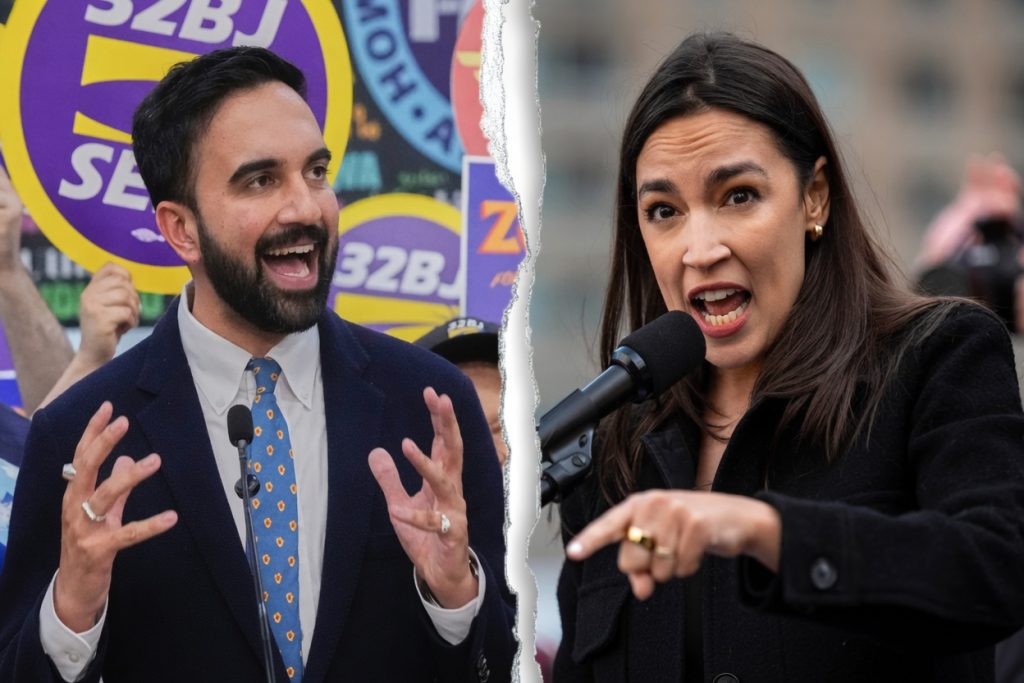
Rep. Greg Steube, R-Fla., announced he plans to introduce a House rules amendment that would prevent newly elected members of Congress from being seated if they refuse to swear the constitutional oath of office.
Steube unveiled the proposal during an interview with commentator Benny Johnson before reiterating his position in a post on X. “Every member of Congress has to swear an oath to protect and uphold the Constitution,” Steube said. “If she is refusing to do that, she should not be seated. I think we should pass a rule,” he continued. “This program has given me the idea to file an amendment to the rules.”
In a later post on X, Steube expanded on the proposal. “The oath to defend the Constitution isn’t optional,” he wrote. “If you’re elected to Congress but refuse to swear it, you shouldn’t be sworn in!!” “I’m calling for a House rules change to ensure anyone who refuses the oath is barred from taking their seat.”
BREAKING: Rep. Greg Steube Says Newly-Elected Socialists Who Can't Swear an Oath to America Should NOT Be SEATED in Congress, Announces He Will File An Amendment to Create New Rule:
"Every member of Congress has to swear an oath to protect and uphold the Constitution. If she is… pic.twitter.com/j2iAuNyPwb
— Benny Johnson (@bennyjohnson) June 24, 2026
Steube’s Comments Target Democratic Socialist Candidate
Steube’s comments were directed at Democratic Socialist congressional candidate Darializa Avila Chevalier, whom he argued has a public record that raises questions about whether she could take the constitutional oath in good faith. According to Steube, Avila Chevalier founded the Columbia University Apartheid Divest organization, commonly known as CUAD. He pointed to the group’s published platform, which includes statements calling for “Death to America,” the “total eradication of Western Civilization,” and the use of militant force to achieve those objectives.
Steube also referenced previously reported social media posts attributed to Avila Chevalier, including one in which she reportedly joked about using an American flag as a napkin. “These people are incompatible with our country and cannot uphold their oath of office,” Steube said. He argued that the constitutional oath requires members of Congress to support and defend the Constitution and questioned whether someone associated with those positions could honestly make that commitment.
Even far-left Hakeem Jeffries isn’t liberal enough for the Dem base anymore.
Last night in NY, his endorsed candidates got crushed by Zohran Mamdani-backed socialists. This should be a huge wake up call!
Darializa Avila Chevalier: “I still believe that all deportations are… https://t.co/pYnkoTLwUu
— Congressman Greg Steube (@RepGregSteube) June 24, 2026
Under Article VI of the Constitution, all members of Congress are required to take an oath or affirmation to support the Constitution before assuming office. The current oath states that members will “support and defend the Constitution of the United States against all enemies, foreign and domestic” and “bear true faith and allegiance to the same.”
Details of the Proposed Amendment
Steube’s proposal would create a House rule governing members who decline to take that oath. He has not yet released the text of the proposed amendment or explained how it would apply in situations where questions arise about a member’s intent or past statements.
The oath to defend the Constitution isn’t optional.
If you’re elected to Congress but refuse to swear it, you shouldn’t be sworn in!!
I’m calling for a House rules change to ensure anyone who refuses the oath is barred from taking their seat. pic.twitter.com/xM81536z3n
— Congressman Greg Steube (@RepGregSteube) June 25, 2026
The Democratic Socialist candidate recently won her Democratic primary in New York and is expected to compete in the general election for a seat in the U.S. House. If elected, she would still be required to take the constitutional oath before being sworn into office.
BREAKING: Rep. Greg Steube Says Newly-Elected Socialists Who Can’t Swear an Oath to America Should NOT Be SEATED in Congress, Announces He Will File An Amendment to Create New Rule: “Every member of Congress has to swear an oath to protect and uphold the Constitution. If she is… pic.twitter.com/j2iAuNyPwb – Benny Johnson (@bennyjohnson) June 24, 2026
Political Context and House Procedures
Even far-left Hakeem Jeffries isn’t liberal enough for the Dem base anymore. Last night in NY, his endorsed candidates got crushed by Zohran Mamdani-backed socialists. This should be a huge wake up call! Darializa Avila Chevalier: “I still believe that all deportations are… https://t.co/pYnkoTLwUu – Congressman Greg Steube (@RepGregSteube) June 24, 2026
The oath to defend the Constitution isn’t optional. If you’re elected to Congress but refuse to swear it, you shouldn’t be sworn in!! I’m calling for a House rules change to ensure anyone who refuses the oath is barred from taking their seat. pic.twitter.com/xM81536z3n – Congressman Greg Steube (@RepGregSteube) June 25, 2026
Whether House leadership will consider Steube’s proposed rules amendment remains unclear. The House adopts its rules at the beginning of each new Congress, and any changes would require approval by a majority of the chamber. This article may contain commentary which reflects the author’s opinion.