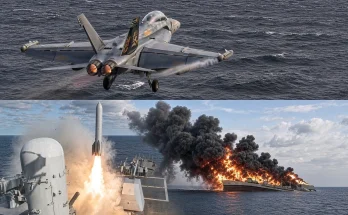
President Donald Trump’s announcement of a “very successful attack” on Iranian nuclear facilities immediately sent shock waves across the Middle East, raising fears that the confrontation could rapidly expand beyond the strikes themselves.
In Tehran, Iranian Foreign Minister Abbas Araghchi condemned the operation as “outrageous” and “criminal,” arguing that Iran retained the right to respond in self-defense. His warning was unmistakable. By declaring that Iran “reserves all options,” Araghchi left open the possibility of retaliation and signaled that Tehran was not prepared to simply absorb the attack without a response.
The statement intensified concerns that the strikes could mark the beginning of a much broader and more dangerous phase of the conflict. Any Iranian retaliation against U.S. or Israeli interests could trigger another round of military action, creating a cycle of escalation that becomes increasingly difficult to contain.
International Response to the Nuclear Strikes
In Washington and Jerusalem, officials portrayed the operation as a major military success and a serious blow to Iran’s nuclear ambitions. But the reaction overseas was far more cautious.
European governments expressed concern that the strikes could destabilize an already fragile region and undermine years of diplomatic efforts designed to prevent Iran’s nuclear dispute from turning into a larger war. Officials across major European capitals focused on the possibility of miscalculation, warning that even limited retaliation could quickly produce consequences far beyond the original battlefield.
The central concern was no longer simply whether Iran would respond, but how, when and against whom.
A Dangerous Moment for the International Community
At the United Nations, diplomats faced the difficult task of balancing condemnation, restraint and calls for de-escalation. Governments around the world closely monitored developments, knowing that even a single military or political decision could dramatically alter the trajectory of the crisis.
Markets, allies and regional governments were also watching for signs of what comes next. The immediate question was whether Tehran would choose restraint or retaliation—and whether Washington and Jerusalem would respond if Iran struck back.
For now, the conflict has entered a dangerous period of uncertainty. The nuclear facilities may have been the immediate targets, but the consequences of the operation could reach far beyond them. The coming days could determine whether the confrontation ends with pressure for diplomacy or becomes the opening chapter of a much wider regional war.