Susan Collins Breaks With Senate Republicans, Joins Democrats in High-Stakes Healthcare Vote
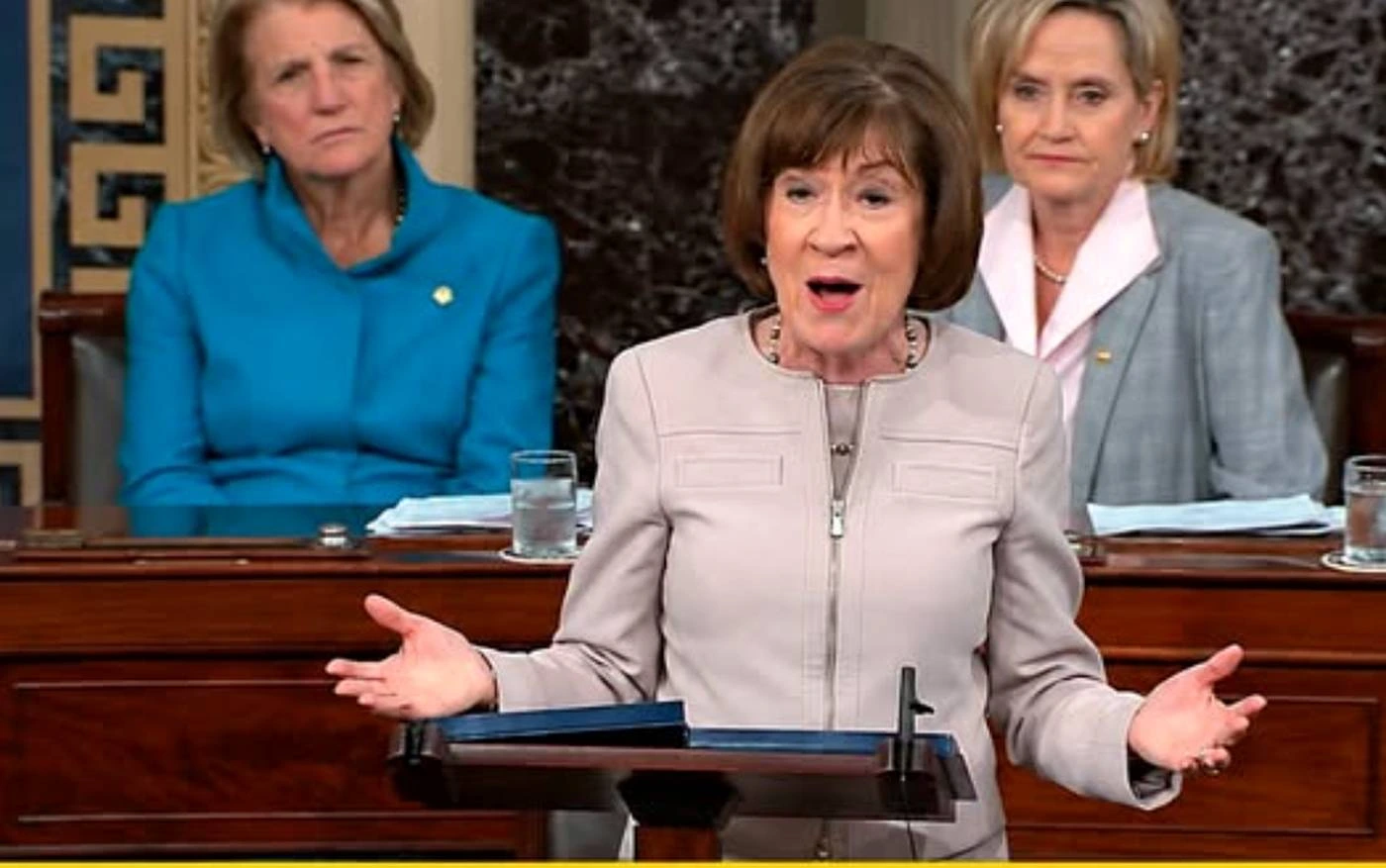
Maine Republican Sen. Susan Collins broke with her party’s leadership this week, siding with Democrats in a closely watched Senate procedural vote that threatened to complicate a major Republican-backed budget package.
Collins joined Sen. Jon Ossoff (D-Ga.) in supporting a motion to send the Senate’s $70 billion budget reconciliation legislation back to the Judiciary Committee for further review. The Democratic proposal called for an investigation into allegations that insurance companies have improperly denied or delayed medically necessary healthcare coverage and treatment.
“Let’s ban insurance companies from denying or delaying medically necessary healthcare to Americans,” Ossoff declared on the Senate floor.
During his remarks, Ossoff highlighted the case of a constituent diagnosed with multiple myeloma, a form of blood cancer, who reportedly encountered difficulties obtaining insurance coverage for essential medical treatment.
Ossoff argued that the experience reflects a broader problem facing American patients, many of whom struggle to access necessary care because of insurance denials and lengthy delays.
Collins was among the few Republicans who supported the Democratic motion. Notably, Republican Sens. Dan Sullivan of Alaska and Josh Hawley of Missouri, who backed a similar proposal in April, opposed the latest effort.
Had the motion passed, it could have significantly complicated the Republican reconciliation package, which includes billions of dollars in funding for Immigration and Customs Enforcement and Border Patrol through 2029.
The vote also comes at a particularly significant moment for Collins, who recently conceded her reelection race to Democrat Troy Jackson, bringing an end to a Senate career that began in 1996.
“It has been the honor of my life to serve the people of Maine in the United States Senate,” Collins said, confirming that she had contacted Jackson to congratulate him and committed to helping ensure a smooth transition.
Her departure represents a major change for Senate Republicans, especially given her leadership of the powerful Senate Appropriations Committee, which oversees federal spending decisions and plays a critical role in determining how taxpayer dollars are distributed.
Throughout her career, Collins frequently pointed to her seniority and committee influence as important tools for securing federal resources and delivering results for Maine.
Her successor, Jackson, is a fifth-generation logger and former president of the Maine Senate who built his campaign around working-class Americans, organized labor, and rural communities.
“Maine, I owe you everything,” Jackson wrote on X following his projected victory, promising to stay connected to the people and communities that shaped his political career.
Jackson’s path to the Senate was anything but conventional. He replaced Democratic nominee Graham Platner after Platner withdrew from the race in July amid sexual-assault allegations. The Maine Democratic Party subsequently selected Jackson to take his place.
His campaign also faced controversy following reports about his relationship with his partner, who is his second cousin. The reports indicated that the couple share great-grandparents, adding another layer of scrutiny to an already challenging campaign.
Despite the obstacles, Jackson ultimately defeated Collins, ending the political