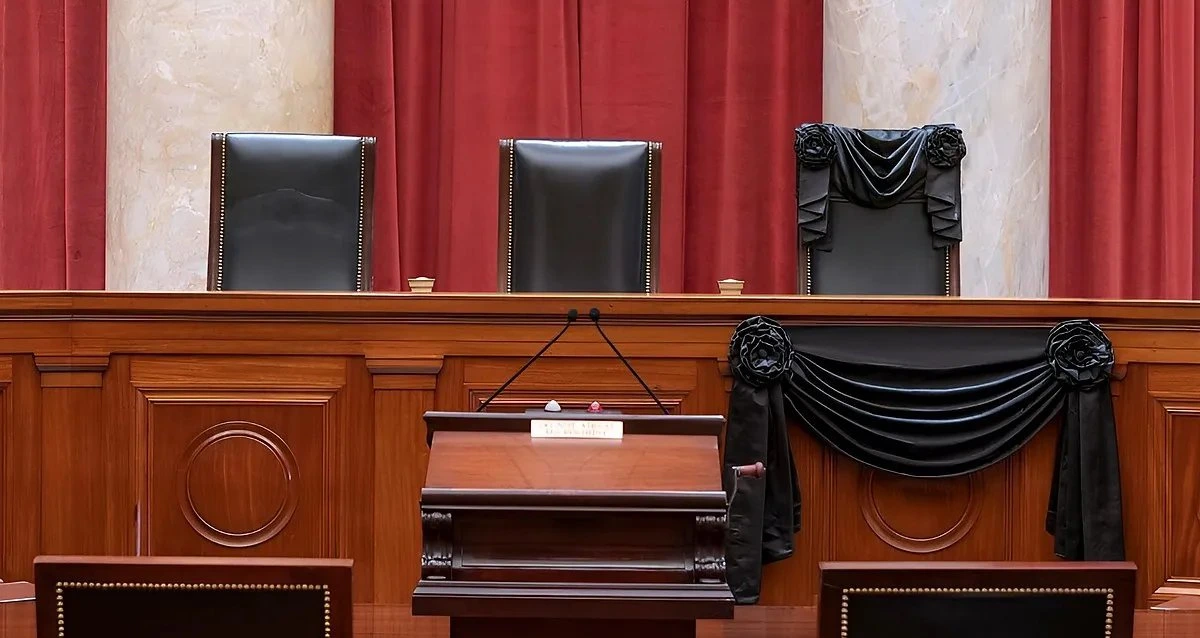
Utah Supreme Court Justice Diana Hagen resigned Friday amid mounting political pressure from Republican leaders, ending her tenure on the state’s highest court despite an earlier investigation that found misconduct allegations against her to be unsubstantiated.
Gov. Spencer Cox announced Hagen’s resignation, which took effect immediately, following weeks of controversy surrounding allegations that she had an inappropriate relationship with an attorney who appeared before the court.
The allegations were reviewed by Utah’s Judicial Conduct Commission, whose members ultimately dismissed the complaint as “speculative, overstated, and misleading,” according to The Salt Lake Tribune.
However, the commission’s findings did little to quiet the political controversy. Republican leaders, including House Speaker Mike Schultz and Senate President J. Stuart Adams, continued demanding additional scrutiny, arguing that unanswered questions remained.
The Utah Republican Party also launched a campaign encouraging voters to remove Hagen during an upcoming judicial retention election.
In her resignation letter, Hagen explained that the personal consequences of the controversy had ultimately influenced her decision to leave the court.
She acknowledged that public service naturally involves intense scrutiny but argued that her family and friends should not be forced to endure the same treatment.
“But my family and friends did not choose public life,” Hagen wrote. “They do not deserve to have intensely personal details surrounding the painful dissolution of my thirty-year marriage subjected to public scrutiny.”
Hagen maintained that she would have preferred to continue serving Utah but could no longer justify the personal cost to those closest to her.
“I would love nothing more than to continue serving the people of Utah as a Supreme Court Justice,” she wrote, “but I cannot do so without sacrificing the privacy and well-being of those I care about.”
Republican legislative leaders welcomed the resignation, describing it as being “in the best interest” of the Utah Supreme Court. Schultz and Adams also confirmed that they would not pursue additional investigations into the specific allegations.
Meanwhile, Cox and Chief Justice Matthew Durrant announced that state leaders from all three branches of government would work together on potential reforms to the Judicial Conduct Commission, with the stated goal of strengthening accountability and preserving public confidence in the judiciary.
Durrant separately expressed sadness over Hagen’s departure, recognizing her contributions to Utah’s legal system and her work supporting crime victims, mentoring young attorneys and prosecuting the kidnapper of Elizabeth Smart.
The controversy also has a broader political dimension involving a high-profile dispute over Utah’s congressional redistricting process.
Hagen participated in a Utah Supreme Court decision involving legislative authority to repeal voter-approved ballot initiatives. The ruling became politically significant because it affected the state’s redistricting dispute and a congressional map that gave Democrats an additional opportunity to compete for a House seat.
One of the attorneys involved in the case, David Reymann, was identified in the complaint alleging an inappropriate relationship with Hagen.
The complaint reportedly originated with allegations from Hagen’s former husband before being submitted to the Judicial Conduct Commission. Following its review, the commission’s bipartisan members voted to dismiss the allegations.
The matter resurfaced after the commission’s report became publicly available through a records request, prompting Republican lawmakers to demand an independent investigation.
Hagen’s resignation has also drawn criticism from legal organizations concerned about the political pressure placed on members of the judiciary.
The Utah State Bar described her departure as a significant loss, while advocates for judicial independence warned that political campaigns targeting judges could threaten the independence of the courts.
Tensions between Utah’s judiciary and Republican-controlled Legislature have intensified in recent months following several court decisions challenging Republican-backed policies.
Earlier this year, lawmakers approved legislation adding two seats to the Utah Supreme Court, a move critics argued could influence the court’s ideological balance.
Hagen was appointed by Cox in 2022 after previously serving on the Utah Court of Appeals. Her departure creates another vacancy on the state’s highest court, which the governor will now have to fill.
With Hagen’s resignation, three seats on the Utah Supreme Court are now open, creating an important opportunity for future appointments that could shape the state’s judicial direction for years.
Although the misconduct complaint was dismissed, the