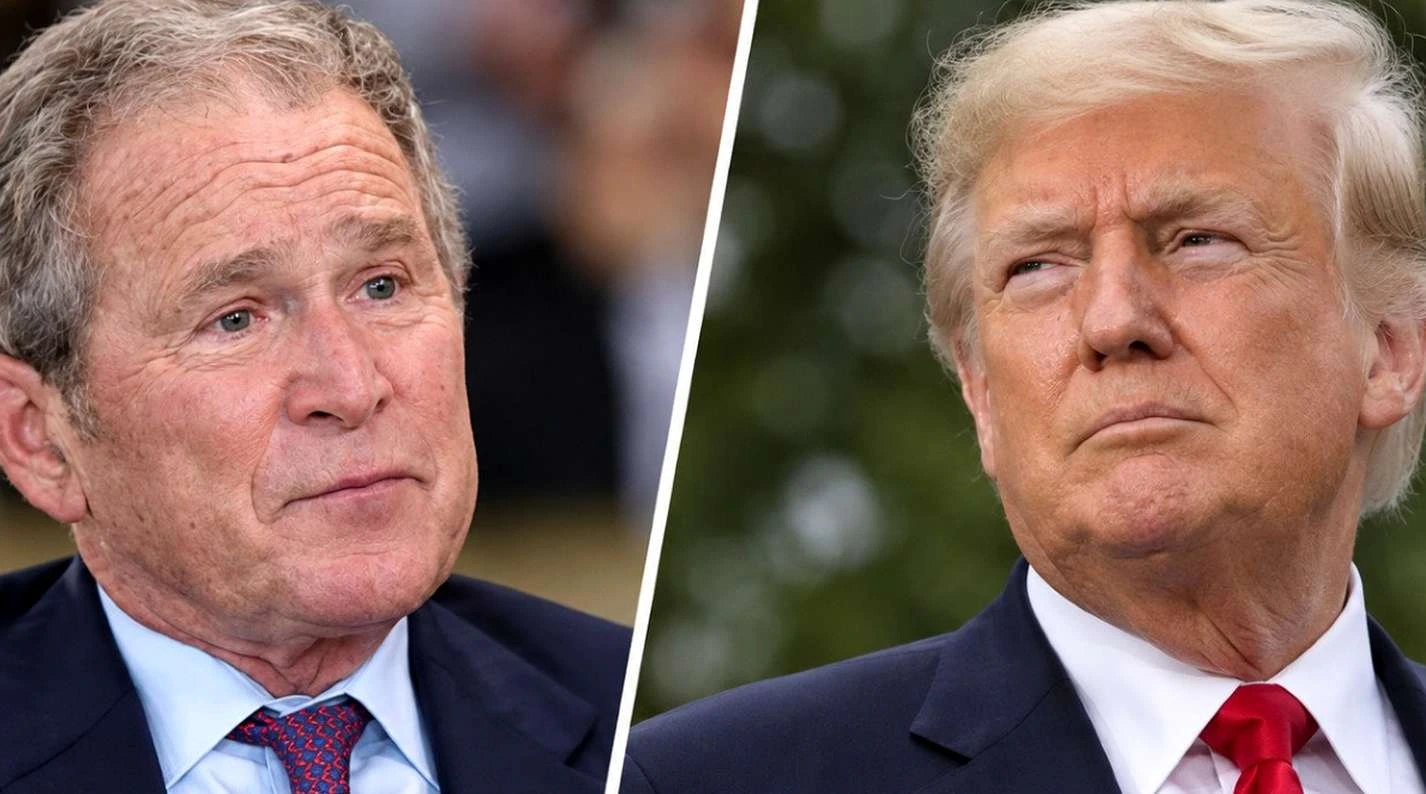
A political controversy is emerging in Texas after Barbara Bush, the daughter of former President George W. Bush, made a $2,500 contribution to a political action committee supporting Democratic Senate nominee James Talarico.
Federal Election Commission records show that Barbara Bush donated to Lone Star Rising PAC on September 23, according to reporting by Texas Public Radio and Fox News.
The contribution has attracted attention because of the Bush family’s long-standing ties to the Republican Party and its influence in American politics. Talarico is preparing to face Republican Texas Attorney General Ken Paxton in the November 3 general election.
Importantly, the donation was made by Barbara Bush personally and does not represent an endorsement from her father, former President George W. Bush.
Barbara Bush, the twin sister of NBC television personality Jenna Bush Hager and granddaughter of former First Lady Barbara Bush, has previously demonstrated political interests that do not always align with those of prominent Republican figures in her family.
Her latest contribution has once again brought attention to the political differences within one of America’s most recognizable Republican families.
Lone Star Rising PAC has accounted for nearly all outside spending supporting Talarico. Unlike traditional campaign contributions made directly to candidates, independent expenditure committees can accept substantial donations and spend money supporting candidates, provided they do not coordinate their activities with the campaigns.
The contribution was disclosed through federal campaign finance reporting requirements, allowing the public to identify the donor and the amount given.
Campaign finance expert Andrew Cates also noted that certain nonprofit organizations operate under different disclosure requirements, meaning some political donations may not appear in the same public reporting system.
The controversy comes as the Bush family has attracted attention for another development involving the Texas Senate race.
Former President George W. Bush recently returned to the Republican fundraising circuit, participating as a special guest at a September fundraiser supporting Senate Republicans. However, the event did not include Republican Texas Senate nominee Ken Paxton.
The fundraiser was hosted by Sen. John Cornyn for Maintain the Majority, a political action committee supporting Republican efforts to retain control of the Senate.
The omission is particularly notable given the political history between the candidates. Paxton defeated Cornyn in this year’s Republican Senate primary. He also defeated George W. Bush’s nephew, George P. Bush, in the 2022 Republican primary for Texas attorney general.
Those previous contests provide important context for the latest developments, although neither Bush nor Cornyn publicly attributed Paxton’s absence to personal disagreements.
The fundraising event featured several prominent Republican figures, including Alaska Sen. Dan Sullivan, Ohio Sen. Jon Husted, and Maine Sen. Susan Collins.
Other Republican nominees listed among the participants included Mike Rogers of Michigan, John Sununu of New Hampshire, and Ashley Hinson of Iowa. Minnesota Senate nominee Michele Tafoya was also added to the event, according to reporting cited by Fox News.
Paxton was not included among the participants. Republican nominees Mike Collins of Georgia and Michael Whatley of North Carolina were also absent.
The broader guest list suggests that the fundraiser was not limited to candidates personally aligned with every major figure in the Republican Party. Nevertheless, Paxton’s absence has drawn attention because of his recent primary victory and his prominent position in the Texas Senate contest.
Paxton secured the Republican nomination with President Donald Trump’s endorsement and will now face Talarico in one of the country’s closely watched Senate races.
Together, Barbara Bush’s contribution to a Democratic-supporting PAC and George W. Bush’s appearance at a Republican fundraising event have highlighted the different political directions emerging within the broader Bush family and the Republican establishment.
With the November election approaching, Texas is shaping up to be an important political battleground, where competing Republican factions, Democratic ambitions, and the influence of national political figures could all play significant roles in determining the outcome.