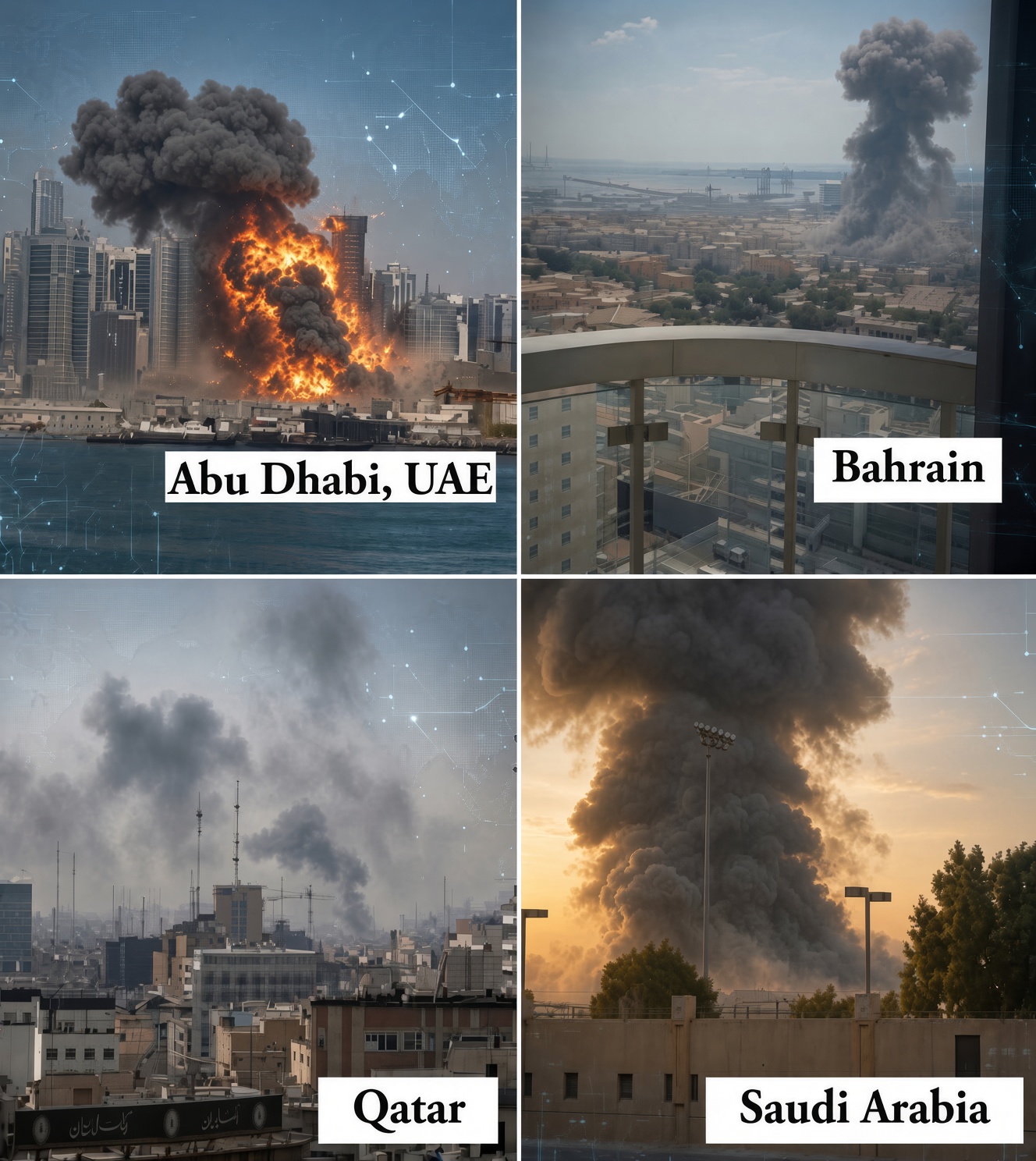
Iranian Missile and Drone Attacks Raise Alarm Across Gulf as U.S. Bases Face Growing Risks
The Persian Gulf is facing renewed security concerns as Iranian missile and drone attacks threaten locations hosting U.S. military forces and put regional allies on heightened alert. Air-defense systems, emergency warnings and military readiness measures underscore the risk that the confrontation could expand beyond Iran’s borders.
The Gulf region hosts a significant American military presence, including major installations in Bahrain, Qatar, Kuwait and the United Arab Emirates. These facilities play important roles in U.S. operations, making them strategically significant during periods of escalating tensions with Tehran.
Reports of Iranian attacks on U.S.-linked targets have highlighted the vulnerability of military infrastructure across the region. However, claims about individual strikes, interceptions and damage must be assessed against official statements and independently verified reporting.
U.S. Military Installations Face Heightened Risks
The United Arab Emirates remains an important part of the regional security network, with Al Dhafra Air Base supporting U.S. military operations. Previous Iranian missile and drone attacks have raised concerns about the vulnerability of American-associated facilities and the challenges facing Gulf air-defense systems.
Authorities must still establish the extent of any damage from individual attacks before definitive conclusions can be drawn. Reports of explosions or incoming threats do not necessarily confirm that a military installation was hit or that its operations were disrupted.
Bahrain also occupies a central position in Washington’s regional military strategy. The kingdom hosts Naval Support Activity Bahrain, headquarters of the U.S. Navy’s Fifth Fleet, which oversees important maritime operations in the region.
Any confirmed attack on facilities supporting the Fifth Fleet could carry significant implications for maritime security and the protection of commercial shipping. Bahrain’s own security forces also face the challenge of responding to potential threats while protecting civilian areas and critical infrastructure.
Qatar and Kuwait Remain Strategically Exposed
Qatar hosts Al Udeid Air Base, a major hub for U.S. military operations in the Middle East. Its strategic importance makes the installation a significant concern during periods of confrontation between Washington and Tehran.
Previous attacks have raised questions about the vulnerability of facilities supporting American forces. Satellite imagery and other independent evidence can help establish whether specific structures have sustained damage, while official assessments are necessary to clarify the operational consequences.
Kuwait also hosts facilities supporting U.S. forces and faces risks from regional missile and drone activity. Its air-defense capabilities are an important part of efforts to protect military installations, infrastructure and civilians from incoming threats.
Taken together, these locations illustrate the wider security challenge facing Gulf governments: protecting their territories and strategic infrastructure while avoiding further escalation in a conflict involving major regional and international powers.
Strait of Hormuz Raises Global Economic Concerns
The military confrontation also threatens one of the world’s most important energy routes: the Strait of Hormuz.
The narrow waterway connects the Persian Gulf with international shipping lanes and serves as a critical passage for global oil and gas supplies. Prolonged fighting, threats to commercial vessels or restrictions on navigation could disrupt energy shipments and increase uncertainty across international markets.
Shipping companies, energy producers and governments are particularly sensitive to developments in the strait because even temporary interruptions can complicate transport schedules, raise insurance costs and put pressure on energy prices.
Each additional military incident increases concerns about the possibility of a broader disruption. The consequences would extend beyond the Middle East, affecting countries and industries that depend on reliable energy supplies and stable maritime trade.
Risk of Further Regional Escalation
The expanding geographic reach of attacks and countermeasures underscores how quickly a confrontation involving Iran and the United States can affect neighboring countries.
For Washington and its Gulf partners, immediate priorities include protecting personnel, intercepting incoming threats, assessing damage and safeguarding critical infrastructure. At the same time, military responses carry the risk of triggering further retaliation and widening the conflict.
The situation also presents a difficult challenge for regional governments seeking to defend their territories without becoming more deeply involved in a prolonged war.
Verified information remains essential. Reports of missile launches, drone interceptions and damage should be distinguished from claims made by the parties involved, particularly while military operations are ongoing.
A Critical Moment for Gulf Security
The Persian Gulf remains a strategically sensitive region where military installations, energy infrastructure and international shipping routes operate in close proximity.
Further attacks could intensify pressure on U.S. forces and regional allies while increasing the economic risks associated with instability around the Strait of Hormuz. A sustained diplomatic effort could help reduce those dangers, but the immediate outlook depends on developments on the ground and the decisions made by Washington, Tehran and regional governments.
The central concern is whether the current confrontation can be contained or whether another major incident will trigger a wider cycle of retaliation. The answer will have implications not only for Gulf security but also for global energy markets and international trade.